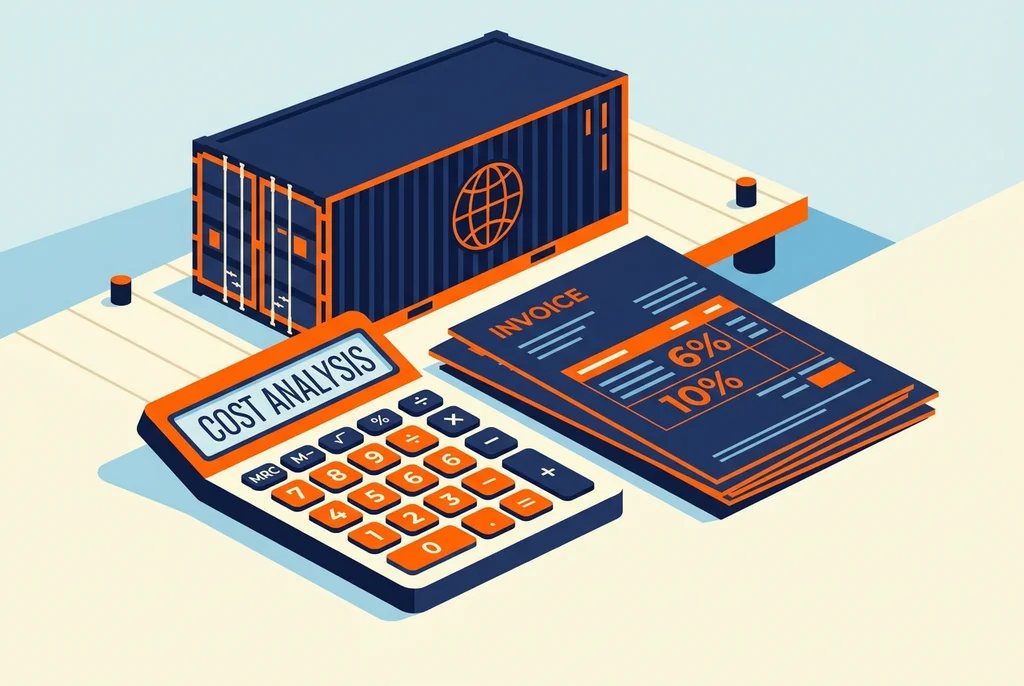
Quick Summary: China fulfillment agent cost should be judged by what the fee controls after the buyer has supplier links, quotations, or an auto parts order in China. For BuyFromGuangzhou, the standard service fee is 6% of product value for standard auto parts, and 10% for salvage or dismantled parts that need heavier checking and handling. Freight is quoted separately, the minimum product value is USD 1,000, and there is no monthly retainer or setup fee. The real question is not only the percentage; it is whether the fee buys receiving, checking, dashboard visibility, consolidation, documents, and shipment coordination before the goods leave China.
BuyFromGuangzhou fee scope at a glance
Fee item Current scope Standard new auto parts 6% of product value Guangzhou used or dismantled auto parts 10% of product value Included scope (as agreed) Can include supplier receiving, carton registration, quantity and visible-condition checks, visible label or model-reference checks, issue notes, consolidation, export document information, shipping handover coordination, and dashboard updates. Excluded or separately arranged International freight or shipping; specialized laboratory testing or technical third-party inspection unless separately arranged. Minimum order condition Minimum product value: USD 1,000. No monthly retainer or setup fee.
A cost question usually arrives when the order is already real. The buyer has supplier links, a quotation, maybe several 1688 items, and a rough shipment plan. At that moment, a low commission number can look attractive because the buyer is still looking at a spreadsheet, not at cartons moving across China.
I look at the same order from the other end. After payment, suppliers start moving at different speeds. One carton arrives with a clean label. Another has no outside mark. A sensor line is short. Brake pads are ready, but the supplier has not sent domestic tracking. The buyer does not only need an agent price. The buyer needs to know who is controlling that physical movement before the forwarder receives the cargo.
China fulfillment agent cost is not only a percentage
When a buyer asks, "What is your fee?" I first want to know what work the fee is supposed to include. A percentage without scope is not a price comparison. It is just a number.
For an auto parts order, the scope can change the real cost more than the headline rate. Does the agent receive goods from several suppliers? Does someone match cartons to the order list? Are quantities checked? Are visible labels, OE references, connector shapes, carton marks, or packaging problems recorded when relevant? Is there a dashboard showing what has arrived and what is still missing? Are documents and shipment handover coordinated from the confirmed goods, not from supplier chat?
If the answer is unclear, the buyer may still be managing the order personally. The agent is only passing messages. That may be cheaper on paper, but it does not solve the China-side execution problem.
The fee should buy a controlled order record
Before goods arrive, a serious fulfillment team should turn the buyer's supplier links and quotation into a working order record. Supplier name, item line, quantity, model or reference details, carton expectation, urgency, destination, and shipment plan should not live only inside chat history.
For BuyFromGuangzhou work, that record connects to the later receiving and checking steps. When a carton arrives, we can attach it to the supplier and order line. If the outside mark is unclear, the line is held for identification instead of being pushed into the ready batch. If a supplier ships only part of the order, the shortage can be marked and shown to the buyer.
This is one reason I do not like comparing fulfillment prices only by commission rate. A price that includes no order record, no receiving status, and no issue note is not the same service as a price that makes the order visible.
What the 6% standard fee covers
For standard auto parts orders, BuyFromGuangzhou charges a 6% service fee on product value. This is not a sourcing commission for finding a random factory. It is the China-side execution fee for making an existing purchase plan workable before export.
The 6% scope can include receiving goods from suppliers, registering cartons, checking quantity and visible condition under the agreed scope, matching labels or model references where visible, recording issue notes, consolidating confirmed goods, preparing export document information, coordinating shipping handover, and keeping the buyer updated through the order dashboard.
For many buyers, this is the missing middle between supplier payment and international freight. A supplier can sell the part. A forwarder can move cargo. But someone still has to decide what has physically arrived, what is checked, what is held, what can join the batch, and what documents should match the confirmed goods. That is where auto parts order fulfillment in China becomes a necessary execution layer.
Why salvage and dismantled parts are 10%
Salvage and dismantled auto parts are not handled like a box of new service parts. The goods can be dirtier, heavier, less standardized, harder to identify, and more dependent on visual condition. A dismantled part may need extra photo records, packaging attention, and more careful matching against the buyer's reference.
That is why BuyFromGuangzhou charges 10% for salvage or dismantled parts. The higher fee is not a vague premium. It reflects heavier China-side handling work before those goods can be released for shipment.
I would rather make that clear at the start than hide the extra labor inside unclear handling charges later. If the order is standard new auto parts, the standard 6% model applies. If the order is dismantled or salvage parts, the buyer should expect a different level of checking and handling.
Freight is separate because shipment decisions come later
Freight should not be mixed casually into the service fee. The shipping route depends on what is actually ready, what is urgent, what is heavy, what is bulky, and what the buyer wants to replenish first.
Air can make sense for urgent small parts. Rail or sea may suit heavier replenishment stock or planned batches. Sometimes a combination is more practical: urgent confirmed items move first, while lower-urgency goods wait for the next consolidated shipment. The decision should be made after receiving, checking, and consolidation judgment, not before supplier goods have arrived.
This is why we quote freight separately. A forwarder can move cargo, but the fulfillment work should make sure the cargo handed over is a confirmed batch. For buyers comparing routes, our guide to shipping auto parts from China to Europe gives more context, but the cost decision still starts with the real goods in China.
A low quote is useful only when the scope is visible
A lower agent fee is not automatically wrong. Some orders are simple. Some buyers only need narrow help. The problem is when the buyer compares a narrow quote with a full execution service as if they are the same.
Before choosing by price, ask where these items sit: exchange rate, domestic pickup, warehouse receiving, basic checking, photo records, storage, consolidation, repacking, export document preparation, supplier follow-up, and shipment coordination. If those items are not included, the buyer should know who will do them and what they will cost.
For auto parts importers, the expensive mistake is often not the service fee itself. It is paying a small fee and still having no one in China responsible for the order movement. The buyer then spends time chasing suppliers, guessing what arrived, and making shipment decisions from incomplete information.
Live Tracking shows whether the fee is doing real work
Live Tracking is one of the clearest ways to judge whether a fulfillment fee is connected to real execution. The buyer should not only hear that goods are "being handled." The buyer should be able to see order movement.
A useful dashboard shows supplier status, domestic shipment status, goods received, checking result, issue pending, ready for consolidation, document preparing, and handed over. It can also show shortages, unclear carton marks, wrong labels, missing accessories, or goods waiting for buyer confirmation.
That visibility matters because it changes the buyer's decisions. If three suppliers are ready and one is delayed, the buyer can decide whether to wait or split. If a carton has arrived but the model is unclear, the buyer can hold that line instead of sending a questionable part overseas. The dashboard is not decoration; it is evidence that the fee is buying controlled work.
What to send for a cost review
The fastest way to get a useful quote is to send the real order information. Supplier links, quotations, product list, quantity, product value, destination, urgency, packaging requirements, and whether the goods are standard new parts or salvage/dismantled parts all affect the scope.
If goods are already moving, send domestic tracking numbers and supplier status. If payment has not been made, send the quotation and order list first. The earlier we see the order structure, the easier it is to tell whether the work is mostly receiving and consolidation, or whether supplier confirmation and issue control are needed before purchase.
I would not ask a buyer to accept a service fee blindly. The better approach is to map the fee against the order work: what must be received, what must be checked, what must be visible, what must be consolidated, what documents are needed, and what shipment plan may fit the confirmed goods.
Send the order list you want priced
If you already have supplier links, a quotation, 1688 items, or an auto parts purchase plan in China, send them through our Contact Form. BuyFromGuangzhou can review the scope and tell you whether your order fits standard 6% fulfillment, 10% salvage or dismantled parts handling, and what freight information is needed for a separate shipping quote.
The best inquiry is practical. Send the order value, supplier list, urgent items, destination, and any special checking or packing requirements. Then the cost discussion can stay tied to real China-side execution, not a vague service introduction.
FAQ
How much does a China fulfillment agent cost for auto parts?
BuyFromGuangzhou charges 6% of product value for standard auto parts fulfillment. Salvage or dismantled auto parts are 10% because they require heavier checking, handling, photo records, and packaging attention. Freight is quoted separately.
What is the minimum order value for BuyFromGuangzhou fulfillment?
The minimum product value is USD 1,000. This keeps the service fee meaningful enough to cover real China-side work such as receiving, checking, dashboard updates, consolidation, documents, and shipment coordination.
Does the fulfillment fee include freight?
No. Freight is quoted separately because the route depends on the confirmed goods, destination, volume, urgency, and shipment plan. Air, rail, sea, or a suitable combination should be decided after receiving, checking, and consolidation judgment.
Does the 6% fee include inspection?
The 6% fee includes agreed receiving and visible checking work, such as quantity, packaging, carton marks, visible condition, and labels or model references where available. It does not replace specialized laboratory testing or a technical third-party inspection unless that is arranged separately.
Why are dismantled or salvage parts charged at 10%?
Dismantled and salvage parts usually need more labor than standard new parts. They may require more careful identification, condition photos, packaging attention, and buyer confirmation before release, so the handling scope is heavier.
How can I know the fulfillment work is actually happening?
Live Tracking and order dashboard updates should show supplier status, goods received, checking result, issue notes, consolidation status, document preparation, and shipment handover. This visibility lets the buyer see what the fee is buying before the goods leave China.