Quick Summary: If you are deciding how to pay Chinese suppliers safely, the right method depends on the supplier relationship, order terms and what evidence must exist before money is released. Bank transfer is direct but does not give the bank control over product quality. Alibaba Trade Assurance can add platform-based order protection when the order, specifications, communication and payment remain inside the protected process, while a licensed escrow service holds funds under agreed release terms. For an auto parts importer, payment safety is only the first decision; someone in China still needs to receive, check and control the physical goods after payment.
The quotation can look clean before payment. It may list brake pads, filters, sensors, lamps, bearings or suspension parts, with quantities, prices and a promised delivery date. Then the buyer reaches the uncomfortable line: where should the money go, how much should be sent now, and what will stop the balance from being released too early?
This is where I separate two different risks. The first is payment risk: paying the wrong account, using terms that give the buyer no useful leverage, or moving outside a protection process without understanding the consequence. The second starts after the money leaves: whether the supplier actually dispatches the right quantity and whether the goods that arrive match the order.
A safer payment method can improve the first part. It cannot physically read an OE label, count cartons, compare a connector or hold a wrong left/right part in Guangzhou. A serious auto parts order needs both a sensible payment arrangement and visible China-side execution.
Before choosing how to pay Chinese suppliers, define what “safe” must cover
Buyers often ask for the safest method as if one payment button can solve the whole order. I would start earlier. Before money moves, the buyer should be clear about the legal supplier name, beneficiary name, product specification, quantity, delivery term, payment stages and the evidence required before the next payment.
The beneficiary deserves particular attention. If a supplier suddenly changes bank details, asks for payment to an unrelated personal account or sends new instructions from an unfamiliar address, do not treat it as a routine administrative change. Confirm it through a known contact and a second channel that you already trust. The useful question is not only “Can I send this transfer?” It is “Do I know who receives it, what order it pays for and what happens if the supplier does not perform?”
The commercial terms should also connect money to order movement. A deposit may start production or reserve stock. A later payment may depend on goods being completed, inspected, received or otherwise evidenced under the agreement. There is no universal deposit-and-balance split that fits every supplier and every order, so do not copy a percentage from another buyer and call it safe.
For auto parts, the order record should be specific enough to support a later decision: supplier, item line, quantity, OE or buyer reference where relevant, model or left/right detail, packaging requirement, delivery timing and the evidence expected before release.
A bank transfer works only when the release decision is controlled
Telegraphic transfer, usually written as T/T, is common in international trade because it is direct and familiar to many suppliers. But the bank is moving money according to the payment instruction. It is not checking whether 200 filters were packed, whether a lamp is the correct side or whether the supplier met the buyer's product requirement.
That does not make T/T automatically unsafe. It means the buyer needs disciplined conditions around it. Verify the beneficiary details before the first transfer. Put the order reference in the payment record where possible. Keep the quotation, purchase order, proforma invoice and supplier confirmation together. Most importantly, decide what evidence is needed before the balance or next stage is approved.
I would not treat one supplier photo or the words “goods ready” as shipment readiness. Ready for what? The goods may still be at the supplier. The quantity may be unconfirmed. Similar-looking electrical parts may have a different connector. Several suppliers may be moving at different speeds, so one payment decision can affect the whole replenishment batch.
If the buyer pays by T/T, the real protection comes from combining clear commercial terms with a release process. The payment should follow agreed evidence, and the physical goods should still enter a controlled receiving and checking workflow before international shipment.
Alibaba Trade Assurance protects the platform order, not every off-platform promise
Alibaba Trade Assurance can be useful when the supplier and transaction are handled on Alibaba.com. Alibaba's current buyer guidance says buyers should keep communication in its Message Center and pay through the platform's protected process; its official payment guidance also warns buyers not to pay outside the platform if they want the payment protection to apply. The official order should contain the real product requirements, quantity, shipment date and other terms the buyer may need to rely on later.
This matters because a platform dispute can only judge the evidence attached to the protected order and the applicable terms. If the supplier asks the buyer to describe one product on-platform but agree to a different specification in private chat, the buyer has created an evidence gap. If payment is sent outside the approved route, the buyer should not assume the same protection still follows the money.
Trade Assurance is still not a substitute for China-side order execution. A platform may protect agreed product quality, shipping time, payment security and dispute handling under its rules, but it does not automatically identify an anonymous carton at a local warehouse or decide whether three suppliers' goods should join this week's outbound batch.
Use the platform protection for the job it is designed to do. Then use receiving records, photo evidence, checking and shipment-release control for the physical order.
Escrow can delay release, but the inspection terms must be usable
A legitimate escrow service sits between buyer and seller. The parties agree to the transaction terms, the buyer funds the escrow account, and the service releases money according to the agreed acceptance or inspection conditions. This can be useful when both sides accept the service, the product is eligible, the fees are understood and the release terms fit the order.
The word escrow by itself is not enough. Buyers should verify that the provider is legitimate and licensed where applicable, confirm which countries and merchandise it supports, read the fee and dispute terms, and use the provider's real website rather than a payment link supplied by an unknown party. The inspection period and acceptance standard also need to be practical.
For an auto parts order, “buyer received the goods” may not be the same as “the goods are confirmed.” If delivery means arrival at a Guangzhou warehouse, someone still needs to match the cartons to the supplier and order line, check the agreed visible details and report any problem before the acceptance period expires.
Escrow can control when funds move. It does not inspect the connector, OE marking, packaging, quantity or left/right version unless a separate inspection and evidence process has been arranged.
A letter of credit controls documents, not the parts inside the cartons
For some larger or more formal trade transactions, buyer and seller may discuss a documentary letter of credit. The bank handles payment against the documentary conditions in the credit. That structure can be valuable when both parties understand the document requirements and the order justifies the cost and administration.
But documents complying with a credit do not automatically prove that every auto part is correct. The buyer still needs product specifications, suitable inspection arrangements and a China-side release decision. I would not choose a letter of credit only because it sounds more official; the document conditions must match the real commercial risk.
The second safety decision begins after payment leaves your hands
Once the supplier is paid, the order changes from documents and promises into physical movement. One supplier ships two cartons today. Another says stock will arrive tomorrow. A third sends a domestic tracking number but no outside carton mark. That is the point where a payment article usually stops, but it is where an importer can still lose control.
At BuyFromGuangzhou, we treat this stage as auto parts order fulfillment in China. The buyer has already chosen the supplier and accepted the payment terms. Now someone in China must turn the purchase list into a receiving plan and make each delivery visible.
Before goods arrive, we need the supplier list, quotation or purchase order, expected quantities, product references, urgent lines, packaging or label requirements and shipment timing. That becomes the working order record. Without it, a warehouse can receive boxes but cannot prove which part of the buyer's order those boxes complete.
Receiving evidence should decide whether a line is released or held
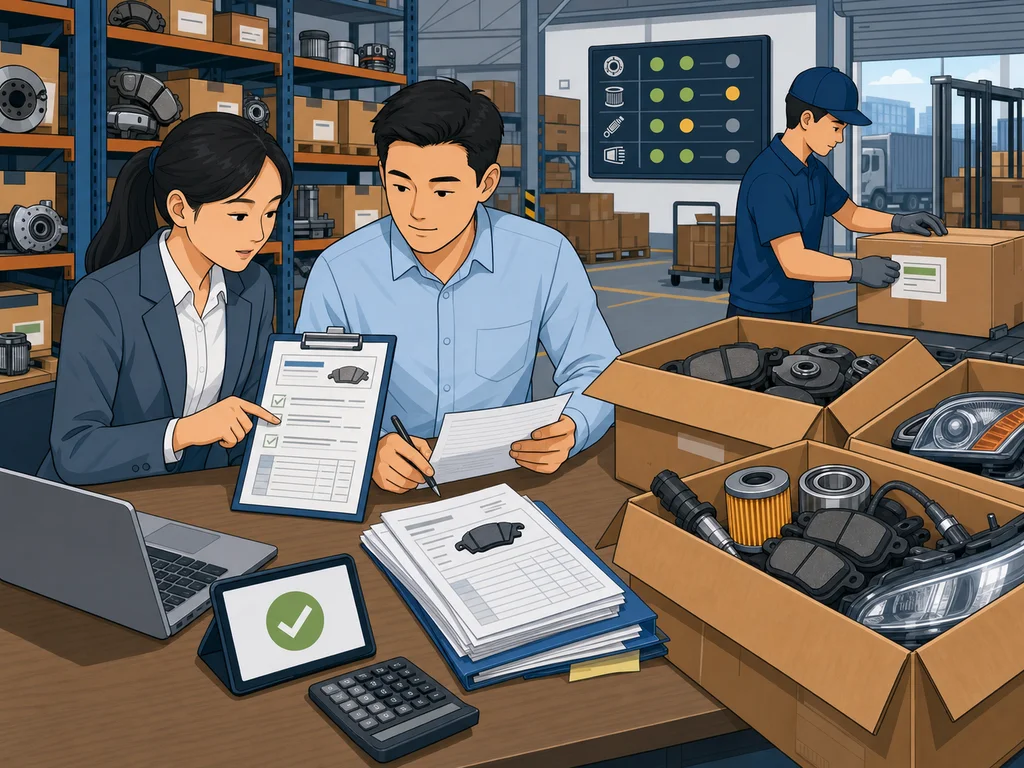
When a carton arrives, it should be attached to the supplier and order line. The receiving record should show what arrived, carton count, expected quantity, visible packaging condition and the identifiers that matter under the agreed checking scope.
For auto parts, that may include the OE or buyer reference on a label, left/right clues, connector shape and pin count for an electrical item, voltage marking, visible damage, carton mark and whether accessories are present. This is not laboratory testing and it does not replace a technical inspection where one is required. It is the practical control that stops an obvious mismatch from being forwarded blindly.
If a line is short, wrong or unclear, we hold it, photograph the issue, update the record and ask for the buyer's or supplier's decision. The next action may be replacement, resend, credit, return, repacking, accepting the confirmed quantity or moving the ready goods first. The important part is that the payment status does not force an uncertain line into the shipment.
Our guide to reading a Chinese auto parts inspection report explains the same principle from the evidence side: a result is useful only when the buyer knows what was checked and what release decision follows.
Live Tracking makes the post-payment order visible
After payment, buyers often receive scattered supplier messages. One says dispatched. One sends a photo. One goes quiet. None of that gives the buyer one reliable view of the order.
Live Tracking should show the working status of each supplier line: waiting for supplier, domestic shipped, received, checking, issue pending, ready for consolidation, document preparing, ready for handover or handed over. The dashboard can also carry carton count, photo evidence, shortage notes and the buyer's release decision.
This is where payment terms and physical execution meet. If a balance is still outstanding, the buyer can use the agreed receiving or inspection evidence before releasing it. If the supplier has already been paid, the buyer can still see what must be corrected before export. In both cases, visibility helps the buyer make a real decision instead of relying on “ready” messages.
What to prepare before you send supplier payment
I would prepare the order-control information before the first payment, not after suppliers start sending anonymous cartons. For a mixed auto parts order, the useful package includes:
- the supplier's legal name, agreed beneficiary details and verified contact;
- quotation, purchase order or platform order with product and quantity details;
- OE numbers, buyer part numbers, left/right notes, connector details or verified images where relevant;
- deposit, balance and release conditions written clearly;
- delivery address, receiving contact and required carton marks;
- inspection or visible-check scope and the evidence needed for approval;
- urgent lines, destination, planned shipment timing and any packing or label requirements.
This information does more than support a payment. It gives the China-side team something real to receive and check against. When the supplier starts moving goods, the order can be managed line by line instead of reconstructed from screenshots.
Choose the payment method and the execution method together
If you know the supplier well, have a simple repeat order and can control the release evidence, direct bank transfer may be commercially sensible. If the order is placed through Alibaba and the supplier supports Trade Assurance, the platform's protected order can add a useful layer. If both parties accept a legitimate escrow provider and the inspection terms fit, escrow can separate buyer funding from seller release.
None of these choices answers who will receive the goods, compare them with the purchase list, record problems, consolidate several suppliers, prepare the confirmed batch and coordinate the forwarder handover. That is a separate operating decision, and for multi-SKU auto parts importers it is often the more important one after payment.
The practical answer to how to pay Chinese suppliers safely is therefore not one method. It is a chain: verified counterparty, clear order, suitable payment and release terms, evidence before the next payment, China-side receiving and checking, visible issue handling, and shipment release based on confirmed goods.
Send the supplier payment terms or quotation for execution review
If you already have Chinese auto parts supplier links, quotations, payment terms or a purchase list, send them through our Contact Form. BuyFromGuangzhou can review the China-side execution scope after the payment decision: supplier follow-up, receiving, visible checks, issue records, Live Tracking, consolidation, export document preparation and shipping coordination.
The most useful inquiry includes the supplier list, quotation or platform order, quantities, OE or buyer part numbers, deposit and balance stage, domestic delivery plan, destination, urgent lines and any inspection, packing or label requirements. We do not give legal or banking advice, but we can show what must happen in China so the paid order becomes a controlled shipment.
FAQ
What is the safest way to pay a Chinese supplier?
There is no single safest method for every order. The buyer should match the method to the supplier relationship, transaction size, contract terms, product risk and evidence required before release. Bank transfer, Trade Assurance and legitimate escrow each control different parts of the transaction.
Is T/T bank transfer safe for paying Chinese suppliers?
T/T can be a practical method when the supplier and beneficiary are verified and the payment stages are tied to clear evidence. The bank transfers funds; it does not confirm product quality, quantity or shipment readiness. Buyers should be especially cautious about sudden bank-detail changes or unrelated beneficiary accounts.
Does Alibaba Trade Assurance protect every supplier payment?
No. Protection depends on the eligible Alibaba.com order, the platform's current rules and the evidence attached to that transaction. Keep the real specifications and communication inside the protected order process and use Alibaba's official payment instructions rather than assuming an off-platform payment has the same protection.
How does escrow work when buying from China?
A legitimate escrow provider holds the buyer's funds and releases them under the terms agreed by buyer and seller. Buyers should verify the provider, supported transaction, fees, inspection period, acceptance standard and dispute process before funding it. Escrow controls money release but does not physically inspect auto parts unless separate inspection is arranged.
Should I pay the full balance before auto parts leave China?
That depends on the contract and supplier terms, but the buyer should know what evidence supports the release. Supplier photos or a “ready” message may not prove quantity, model, packaging or carton identity. Where the agreement allows it, receiving or inspection evidence can support a clearer balance decision.
How does Live Tracking help after supplier payment?
Live Tracking shows which supplier lines are waiting, shipped domestically, received, checked, held for an issue, ready for consolidation or handed over. It helps the buyer see what the payment produced in physical goods and decide what can move before export.