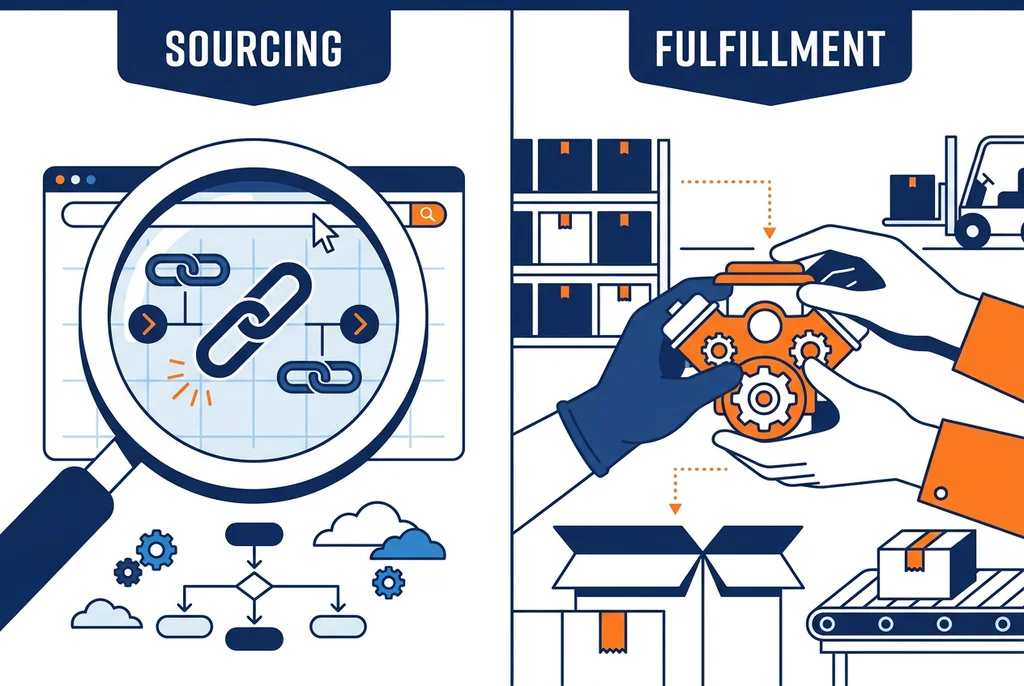
Quick Summary: China sourcing helps a buyer find, compare, and negotiate with suppliers. Order fulfillment controls what happens when supplier links, quotations, or purchase orders become physical goods moving through China. For mixed auto parts orders, that means receiving, matching cartons to order lines, checking quantities and visible details, recording issues, consolidating confirmed goods, preparing document information, and coordinating shipment handover. A buyer who already has suppliers usually needs execution scope more than another supplier search.
An auto parts buyer can have five supplier quotations open, prices agreed, and purchase lines confirmed. That still does not mean there is one shipment.
One supplier sends brake pads first. Another says the filters are ready but has not dispatched them. A third carton arrives with no useful outer mark. The buyer is outside China and needs to know what has physically arrived, what matches the order, and whether this replenishment batch can leave.
That is the practical difference in China sourcing vs fulfillment. Sourcing helps the buyer decide who to buy from. Fulfillment owns the operational middle after that decision, until the confirmed goods are ready for a clear handover.
China sourcing answers who should supply the auto parts
Sourcing work belongs at the supplier decision stage. The buyer may need help locating a factory or market seller, comparing quotations, checking business information, clarifying specifications, discussing minimum order quantity, requesting samples, or negotiating commercial terms.
For an auto parts order, useful sourcing work also means making the request precise enough for suppliers to quote. The buyer may need OE references, model and year information, left or right side, connector details, material, brand or neutral packaging, label requirements, and expected quantity by line.
A good sourcing result is not simply a supplier name. It is a supplier option the buyer can judge against product requirements, price, terms, lead time, and evidence. Our article on what a China sourcing agent does for an auto parts order goes deeper into this stage.
But a supplier being selected does not prove the order has been executed. The quotation can be correct while the later cartons are short, late, mislabeled, damaged, or mixed with the wrong model.
Order fulfillment answers what has physically happened
Once orders are placed, I stop asking only what the supplier promised. I want to know what has physically moved.
Did the seller dispatch? Which courier number belongs to which supplier? Which cartons reached Guangzhou? Which purchase lines are inside them? Are the quantities, visible condition, labels, model references, packaging, and carton marks consistent with the buyer's order? Which goods can join the shipment, and which line should be held?
This is auto parts order fulfillment in China. The work is not another supplier search. It is receiving and registering goods, matching them to the order, checking agreed details, recording problems, consolidating confirmed lines, preparing export document information, and coordinating handover to the shipping side.
A warehouse address alone cannot answer those questions. A forwarder can move cartons, but movement is not the same as confirming that the right auto parts are inside the batch.
The job title matters less than the written scope
Sourcing agent, buying agent, purchasing agent, fulfillment partner, warehouse, and freight forwarder are not standardized titles. One provider may handle several stages. Another may use the same title but stop after supplier introduction or payment coordination.
I would not choose from the title. I would ask for the post-payment scope in writing.
Who follows the promised dispatch date? Who receives the goods? Who matches an anonymous carton to the supplier and order line? Who checks the received quantity? Who compares the visible OE or model reference where applicable? Who records an issue, sends photo evidence, pushes the supplier for correction, and waits for the buyer's release decision? Who decides what joins the outbound batch?
If those responsibilities are missing, the buyer may still be managing the entire order from another country. The provider may be useful, but the execution gap remains.
Mixed auto parts orders make the difference visible
With one supplier and one standard product, the gap can stay hidden. With several suppliers and many SKUs, it appears quickly.
Suppose three suppliers dispatch on different days. The first carton contains brake pads with clear labels. The second delivery is short one order line. The third arrives with a courier label but no supplier carton mark. The buyer cannot treat all three as ready just because tracking says delivered.
We attach each delivery to the supplier and order line, register the carton, check the agreed visible details, and update its status. A clear line may move to ready for consolidation. A shortage is recorded and followed up. An unidentified carton is held, photographed, and traced through the courier record, supplier response, item appearance, or buyer order list before it joins any batch.
This is why multiple-supplier auto parts orders need local execution. The commercial problem is not finding more factories. It is turning separate domestic deliveries into one controlled shipment without losing the connection between carton, supplier, SKU, quantity, and buyer decision.
Issue handling is where fulfillment proves its value
When everything is correct, receiving looks easy. The real test is what happens when one line is wrong.
If the received quantity is short, we compare it with the order line, record the shortage, photograph evidence when useful, update the order status, and ask the supplier to resend or explain. The buyer then decides whether to wait, ship the confirmed goods, or split the batch.
If a model or OE reference is unclear, that line is held. We read the number from the label, packaging, or part where visible and compare it with the purchase list. For left and right parts, connector variants, or products with similar housings, a buyer-verified reference image may be needed before release.
If the outer carton is damaged, a photo should show whether the issue appears limited to packaging or may affect the product. The goods should not quietly move into consolidation while the buyer still thinks the line is normal.
Sourcing can help bring the supplier into the correction discussion. Fulfillment keeps control of the physical goods and the release status while that discussion happens.
Live Tracking shows whether execution is complete
A supplier message saying ready is not the same as goods received, checked, and ready for shipment. The buyer needs statuses that describe real work.
Our Live Tracking and order dashboard can show supplier, item, quantity, carton count, domestic delivery status, received status, checking result, issue note, photo update, consolidation status, document preparation, and shipment readiness. The dashboard does not replace physical checking. It makes that work visible to the buyer while it is happening in China.
This visibility supports decisions. The buyer can see that four supplier lines are ready, one is waiting for correction, and one has not arrived. They can decide whether the replenishment batch should wait or move without relying on a string of vague supplier messages.
Export handover begins with confirmed goods, not a packing list guess
Before cargo goes to the forwarder, the shipment record should reflect what is actually being released. Product descriptions, quantities, carton count, weights, carton marks, and other required document information must connect to the confirmed goods in the batch.
I do not treat every supplier packing list as final export data. Supplier documents describe their own delivery. A consolidated shipment may combine several suppliers, leave one problem line behind, change packing, or move under a different shipment plan.
Fulfillment closes that gap. It identifies what joins this shipment, what waits for the next one, what document information must be prepared, and what the forwarder is receiving. That is the point where several purchases finally become a dispatchable shipment.
Choose the service from your current order stage
If you do not yet know which supplier can make the part, your immediate need is sourcing. Prepare the technical reference, quantity, packaging requirement, destination, and commercial target so the supplier comparison is meaningful.
If you already have supplier links, quotations, purchase orders, or replenishment lists, your immediate need may be fulfillment. Confirm who will follow domestic delivery, receive and register goods, check visible order details, hold problem lines, consolidate confirmed goods, prepare document information, update order status, and coordinate the shipment handover.
Some buyers need both stages. That is fine. The mistake is assuming the sourcing fee automatically includes the later physical work. Ask for responsibilities, records, issue handling, and release control before payment, not after cartons start arriving.
Send the order you already have
If you already have auto parts supplier links, quotations, or a purchase list, send them through our Contact Form. Include supplier names, item references, quantities, urgent lines, destination, expected timing, and any packaging or label requirement.
BuyFromGuangzhou can review the execution scope, receive goods in Guangzhou, match deliveries to order lines, check quantities and visible details, record issues, coordinate supplier correction, consolidate confirmed goods, prepare shipment information, and keep the order visible through Live Tracking before forwarder handover.
FAQ
What is the main difference between China sourcing and fulfillment?
China sourcing helps identify, compare, and negotiate with suppliers. Fulfillment controls the physical order after purchase: domestic delivery follow-up, receiving, checking, issue handling, consolidation, document information, and shipment handover.
Do I still need fulfillment if I found the supplier myself?
Often yes, especially for mixed-SKU or multi-supplier auto parts orders. Finding the supplier does not receive the cartons, confirm quantities and visible details, resolve shortages, combine deliveries, or prepare a controlled outbound batch.
Can one China agent handle both sourcing and order fulfillment?
Yes, one provider may cover both stages, but the title alone does not prove the scope. Ask who owns receiving, checking, issue records, consolidation, dashboard updates, document preparation, and release to the forwarder.
Is a freight forwarder the same as a fulfillment partner?
No. A freight forwarder primarily arranges cargo movement. A fulfillment partner confirms what has arrived, what matches the order, what should be held or released, and what confirmed goods are ready to hand over for shipment.
What should an order dashboard show after suppliers dispatch?
It should show supplier and item lines, domestic tracking, received quantity, carton count, checking status, issue notes, photo evidence, consolidation status, document preparation, and shipment readiness. It should help the buyer decide what can move and what still needs action.
What should I send to get help with an existing auto parts order?
Send supplier links or names, quotations or purchase list, item references, quantities, urgent SKUs, destination, timing, and packaging or label requirements. These inputs make it possible to define the real China-side execution scope before goods start moving.