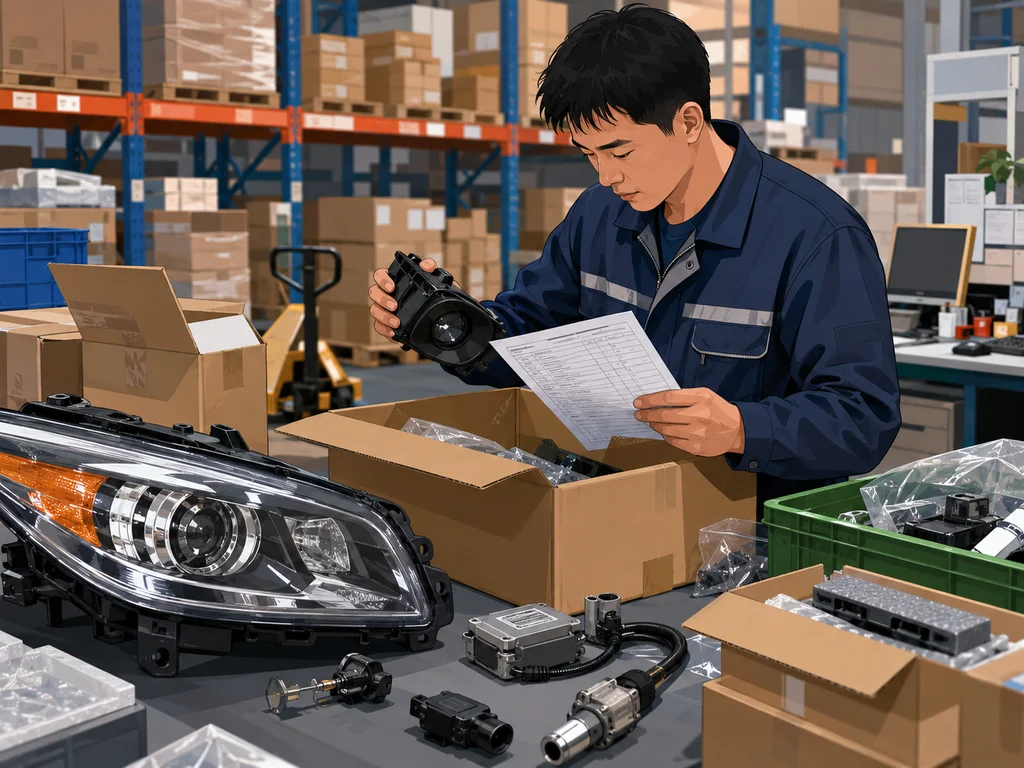
Quick Summary: A china sourcing agent can help an auto parts importer find suppliers, confirm quotations, communicate with sellers and arrange purchasing in China. But for a real auto parts order, the more important question is what happens after the supplier is found. Goods still have to move from several sellers, arrive at a China-side address, be matched to order lines, checked for quantity and visible details, consolidated into a shipment batch, documented, and handed over to the right shipping channel. If you already have suppliers, quotations, links or a replenishment plan, you may not only need sourcing. You need visible China-side order execution.
A buyer may start with a simple search: china sourcing agent. The buyer has a list of brake pads, filters, switches, sensors, bearings, suspension parts, body parts or service items. Some suppliers are already known. Some came from 1688, Alibaba, a market visit, or a previous order. The question looks like supplier search, but the real pressure usually appears later.
The supplier says the goods are ready. One seller sends a domestic tracking number. Another asks for two more days. One carton arrives with no clear mark. A small electrical item looks similar to the photo but has a different connector. The buyer is outside China, and the shipment is supposed to become sellable stock, not a pile of uncertain boxes.
That is where I would separate a sourcing task from an order execution task. Finding a supplier matters. But after the purchase decision, the buyer still needs someone in China to control the physical order.
A china sourcing agent is usually strongest before the purchase
The normal sourcing-agent job starts before money is sent. The agent may search suppliers, ask for quotations, compare MOQ, check communication speed, translate product requirements, confirm lead time, and help the buyer place an order. For many products, that is useful work.
For auto parts, I would still be careful with the word "sourcing". A quotation does not prove the goods will arrive correctly. A supplier profile does not prove that the correct left and right parts will be packed. A product photo does not prove quantity. A tracking number does not prove that the carton belongs to the buyer's exact order line.
This is why a buyer should ask what the agent actually controls after the supplier is chosen. Does the agent only introduce and pay suppliers? Or does the team receive goods, check the order line, record issues, update status, consolidate cartons, prepare documents and coordinate shipment handover?
If your order has only one supplier and one simple product, the difference may look small. If your auto parts order has many SKUs and several suppliers, the difference becomes the order.
The order becomes real only when goods start moving in China
Once suppliers begin domestic delivery, the buyer needs a different kind of control. This is not a spreadsheet exercise. It is physical movement.
One supplier may ship early. Another may hold back one model. A courier may deliver two cartons today and one tomorrow. A supplier may combine several small parts in one parcel. Another supplier may send a carton without an outside label. If nobody in China is matching these arrivals to the buyer's order list, the buyer only has scattered messages.
At BuyFromGuangzhou, we treat this stage as auto parts order fulfillment in China, not just sourcing support. The work is to turn supplier promises and domestic deliveries into a controlled shipment-ready order.
That control starts with knowing what has been purchased, from which supplier, in what quantity, and what visible details matter. Without that reference, a warehouse address is only an address. It does not protect the buyer from wrong items, missing lines or unclear cartons.
Supplier follow-up should be tied to the shipment plan
I do not treat supplier follow-up as casual chatting. For an auto parts order, follow-up should answer practical questions: which lines are confirmed, which are waiting, which have domestic tracking, which are delayed, and which ones are blocking the next shipment batch.
If the buyer needs replenishment stock, a supplier delay is not just an inconvenience. It affects whether the confirmed goods should wait, split, or move first. If the buyer is buying mixed SKUs from different suppliers, one late carton can hold the whole batch unless someone makes a clear release decision.
A loose agent may tell the buyer, "supplier will ship soon." That is not enough. I want to know promised date versus actual dispatch status, whether the supplier has stock, whether a substitute version is being offered, and whether the rest of the order can still move.
That judgment is where sourcing and fulfillment overlap. The buyer does not need more messages. The buyer needs order movement.
Receiving is not the same as having a delivery address
Many buyers think they need a China address. That is only the beginning. A delivery address can receive boxes, but a real fulfillment team identifies them.
When goods arrive, each carton should be connected to supplier, order line, expected quantity, and the buyer's list. If the carton has no mark, it should not be pushed blindly into the ready batch. It may need to be identified through courier record, supplier confirmation, photos, item appearance or the buyer's order sheet.
This is especially important for aftermarket auto parts. Small items can look alike. Packaging can be plain. A supplier may use a Chinese description that does not match the buyer's SKU. A carton may include more than one part number. If receiving is careless, the buyer may not discover the problem until the goods reach the destination warehouse.
Our receiving work for goods from China suppliers is built around this point. The buyer should know what physically arrived, not only what a supplier claimed to send.
Checking must follow the auto parts order line
A china sourcing agent may understand the buying request, but the checking stage needs order-line discipline. Product names are often too broad. "Sensor", "lamp", "filter" or "brake part" is not enough when the buyer has customer orders waiting.
Under the agreed scope, the goods should be checked against the purchase list: quantity, visible condition, packaging, label, carton mark, model reference and OE number where visible. For left and right parts, we look for part-number suffixes, shape, mounting direction or buyer-verified reference images when available. For electrical items, connector shape, pin count, voltage mark and function notes may matter. For door parts and similar categories, I prefer a two-layer check when possible: reference number first, then physical comparison with the buyer's verified image and the supplier photo.
This is not a promise that a basic warehouse check replaces technical testing. It is the practical line between controlled receiving and blind forwarding. Confirmed lines can move. Short quantities are marked. Unclear goods are held. Wrong or suspicious lines are photographed and sent for confirmation before they join the shipment.
That is the work a serious importer should ask about before choosing a service provider. The important question is not only "Can you source this?" It is "How will you control the goods after the supplier ships?"
Live Tracking is how the buyer sees execution before shipment
When a buyer is outside China, visibility is not decoration. It is how the buyer avoids making shipment decisions in the dark.
Live Tracking should show supplier movement and warehouse status while the order is still being executed: waiting for supplier, domestic shipped, received, checking, issue pending, ready for consolidation, document preparing, ready for handover or handed over. That is very different from a final shipping tracking number after the cargo leaves China.
If a sensor line is checked but a brake-pad carton is late, the buyer can decide whether to wait or split. If a carton has no clear mark, the buyer can see it is held. If one supplier shipped short, the buyer can decide whether to ask for resend, accept a credit, or move confirmed goods first.
A useful auto parts order dashboard in China should make those choices visible. It should not be a pretty report after the decision is already lost.
Consolidation is where separate supplier orders become one shipment
A sourcing agent may help buy from several suppliers. But buying from several suppliers is not the same as building one export-ready shipment.
For mixed auto parts orders, consolidation means deciding which goods are cleared to join the batch, which goods are held, which cartons need repacking or labels, which product lines need document preparation, and which route fits the confirmed shipment. Putting every carton together without checking only moves confusion from China to the buyer's warehouse.
This is why China auto parts consolidation should come after receiving and checking, not before. The buyer needs to know what the batch contains, what is missing, and what is being left for the next cycle.
When I look at a replenishment order, I care about shipment rhythm as much as one-time dispatch. Some goods may go by air because the buyer needs them quickly. Heavier or less urgent cartons may fit rail, sea or a combined plan. The route decision should follow the real goods, carton count, urgency, destination and margin, not only the supplier's wish to finish their part.
Documents should reflect what was actually received
Auto parts documents become weak when they are copied from supplier messages without checking the physical order. Product descriptions may be too vague. Quantities may not match what arrived. Carton counts may change after consolidation. A supplier may use one wording while the buyer's records use another.
Before forwarder handover, the buyer should have a cleaner picture: released goods, held goods, carton count, product names, declared information for review, packing list structure and any shipment notes. BuyFromGuangzhou is not a customs authority, but we can help coordinate export document preparation based on the goods actually received and released under the agreed scope.
The article on China auto parts export documents explains this wider point: documents should belong to the controlled order, not to a pile of supplier chat records.
What to ask before choosing a china sourcing agent
If you are comparing agents, do not ask only for commission rate or supplier search ability. Ask how they handle the order after payment. The answer will show whether you are hiring a finder, a purchasing helper, a shipping contact or a real China-side execution team.
For an auto parts order, I would ask these practical questions:
- Will each supplier and order line have a separate receiving record?
- How are shortages, wrong items, unclear labels and delayed domestic deliveries recorded?
- Will I see status before shipment, or only after goods leave China?
- Can the team check visible OE references, labels, packaging, left/right clues and connector details where applicable?
- Who decides whether goods are held, released, split or moved into the next shipment batch?
- Can documents and shipping handover be prepared from the actual released goods?
These questions are more useful than asking for a general company introduction. They force the service provider to explain the operating system behind the order.
When sourcing is enough and when fulfillment is the real need
If you have no supplier, no quotation and no product direction, you may need sourcing first. Someone has to search, compare, communicate and narrow the supplier options.
If you already have supplier links, quotations, a 1688 cart, a market purchase list, repeat replenishment lines or an existing supplier network, the need changes. You may not need another person to search the market. You need someone to execute the order in China.
That is the frame I want buyers to use. The question is not whether a china sourcing agent is useful. The question is whether your current order is still a sourcing problem, or already an execution problem.
For most multi-SKU auto parts importers, once the buying decision is made, the value shifts to receiving, checking, Live Tracking, consolidation, documents, shipping coordination and a planned dispatch rhythm. That is where BuyFromGuangzhou fits.
Send the supplier list or quotation you want executed
If you already have auto parts supplier links, quotations, a purchase list, a 1688 cart, or goods moving inside China, send the details through our Contact Form. BuyFromGuangzhou can review the China-side execution scope: supplier follow-up, receiving, visible checking, issue records, Live Tracking, consolidation, export document preparation, shipping coordination, and a suitable dispatch plan by air, rail, sea or a combination where it fits the order.
The most useful inquiry is practical. Send the supplier list, quantities, OE or buyer part numbers, urgent lines, destination, packing or label requirements, and expected shipment timing. Then we can tell you what China-side work is needed, what information is still missing, and what must happen before the goods are ready for shipment.
FAQ
What does a china sourcing agent do for auto parts buyers?
A china sourcing agent may help find suppliers, request quotations, communicate product requirements, compare basic terms and support purchasing. For auto parts buyers, the agent's real value depends on whether the work also includes China-side receiving, checking, consolidation, documents and shipment coordination after the supplier is chosen.
Is a sourcing agent the same as an order fulfillment partner?
No. A sourcing agent is usually focused on supplier search and purchasing support. An order fulfillment partner controls the physical order after purchase: supplier follow-up, receiving, checking, issue records, consolidation, document preparation, shipping coordination and visible status before handover.
Why do auto parts orders need checking after the supplier ships?
Auto parts orders often include similar models, OE references, left/right parts, electrical variants, packaging differences and mixed supplier deliveries. Checking helps confirm quantity, visible condition, labels, carton marks and model clues before goods are consolidated and exported.
Can one agent handle several Chinese auto parts suppliers?
Yes, if the agent has a real China-side execution process. Several suppliers can be managed through separate supplier records, domestic delivery follow-up, receiving checks, issue handling, consolidation decisions, document preparation and shipment handover.
What should I send when asking BuyFromGuangzhou to review an order?
Send supplier links, quotations, product links, quantities, OE or buyer part numbers, urgent lines, destination, packaging or label requirements, expected shipment timing and any domestic tracking numbers if goods are already moving in China.
Do I need sourcing if I already have suppliers in China?
Maybe not. If you already have suppliers, quotations or a purchase list, your bigger need may be order execution: receiving goods, checking them against the list, consolidating several supplier deliveries, preparing documents and coordinating shipment.
How can I see the status of an auto parts order before it ships from China?
Live Tracking should show whether each supplier line is waiting, domestically shipped, received, checked, held for an issue, ready for consolidation, or ready for handover. It does not replace inspection; it gives the buyer visible status while the China-side work is still happening.