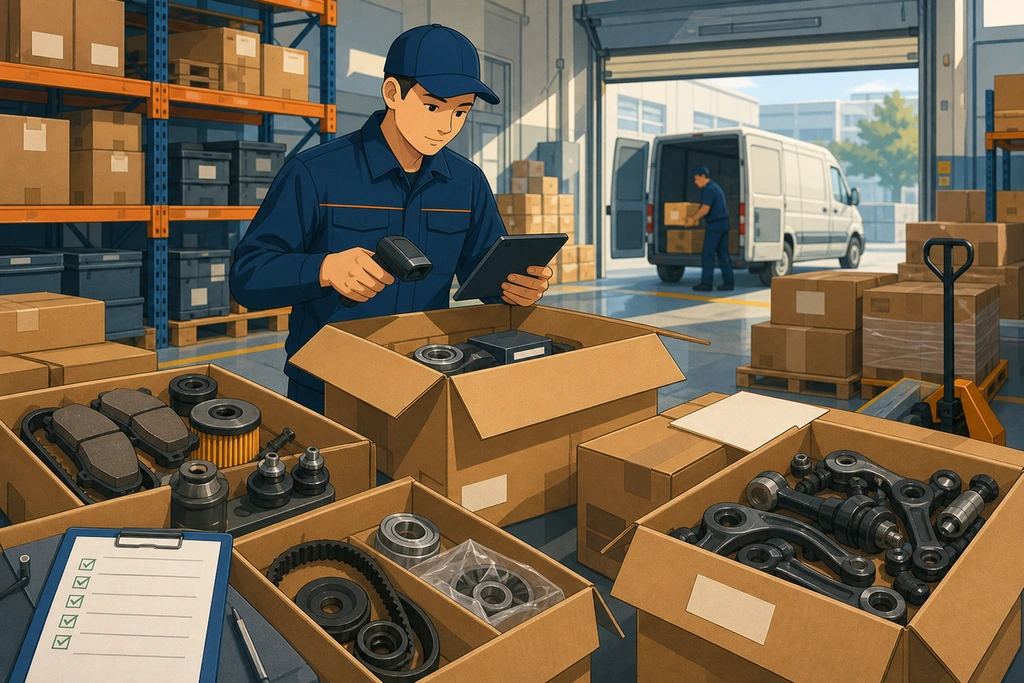
Quick Summary: When buyers need to receive goods from China suppliers for auto parts orders, the job is not just giving suppliers a warehouse address. Someone in China must connect each carton to the supplier, order line, quantity, label, visible condition, issue status, and shipment plan. At BuyFromGuangzhou, we use receiving records, checking notes, photos, Live Tracking, and dashboard updates so the buyer can see what has arrived, what is still missing, what is held, and what is ready for export preparation.
A buyer can have good suppliers and still lose control after the goods leave those suppliers. This is common in auto parts orders. One supplier sends filters on Monday. Another dispatches sensors without a clear carton mark. A third says the goods are ready, but the courier number does not appear until several days later. From outside China, the buyer may only see scattered messages. In the warehouse, the real question is more practical: what has physically arrived, and can we prove it belongs to the right order line?
I do not treat receiving as a simple delivery step. For existing Chinese auto parts suppliers, receiving is where the order starts becoming real. Until cartons are identified, checked, and recorded, the buyer only has supplier promises and courier traces. That is not enough to decide shipment.
A supplier relationship does not replace a receiving operation
Some buyers already know their suppliers well. They have used the same factories or traders before. That helps, but it does not remove the need for China-side receiving and checking.
A supplier usually controls only its own part of the order. It may not know which other suppliers are involved, which SKU is urgent, what the buyer wants to ship first, or what documents and carton records are needed before handover. If every supplier ships to a loose address and nobody owns the middle, the buyer is still managing the order from overseas.
This is why auto parts order fulfillment in China is different from only sourcing products or booking freight. Fulfillment starts to prove value when the goods begin moving inside China: receiving, checking, recording, holding unclear lines, consolidating ready goods, preparing documents, and handing over a clean shipment.
How we receive goods from China suppliers for auto parts orders
Before the first carton arrives, we want the buyer's purchase list, supplier delivery details, product links or quotations, quantity requirements, and any packaging or label notes. If the order has urgent SKUs, we mark that early. If some goods can wait for a later batch, that also needs to be visible before cartons start arriving.
Then we create the receiving structure. Supplier by supplier. Item by item. Quantity by quantity. The order record should show what we expect to receive, which supplier is responsible, and what needs checking when the goods arrive. Without this structure, the warehouse only sees boxes. With it, each box can be attached to a real order decision.
When a carton arrives, we first identify the supplier and match the carton to the order line. We check the courier record, supplier name, carton mark, visible label, quantity information where available, and outside carton condition. If the carton mark is unclear, we do not move it into the ready batch. We photograph it, hold it, and identify it through supplier confirmation, courier information, item appearance, or the buyer's purchase list.
What we check before goods become shipment-ready
For auto parts, the first check is not complicated language. It is practical identity control. Is this the right supplier's goods? Does the label or mark connect to the buyer's order line? Does the received quantity match the delivery note or the expected quantity? Is the packaging visibly damaged? Is there a model, OE reference, voltage, side, connector, or accessory point that the buyer asked us to verify?
We do not pretend that this replaces full technical testing. A receiving check is not a laboratory test. But it does catch many problems before they leave China: short quantity, wrong label, unclear model reference, left/right confusion, missing small accessories, damaged outer carton, or a carton that nobody can identify.
For electrical parts, I want to see practical details such as connector shape, pin count, and 12V or 24V label when they are visible. For left and right parts, we may use OE suffix, part-number marking, shape, mounting direction, and the buyer's verified reference image. For door parts, a two-layer check is often useful: first match the OE or model reference to the order line, then compare the physical part with the buyer's verified image and the supplier's photo. This is not fancy. It is how a wrong line is kept out of a shipment before the buyer pays international freight on it.
Live Tracking should show real warehouse movement, not just delivered
A tracking view that only says delivered is too thin for mixed auto parts orders. Delivered to whom? From which supplier? For which order line? Was it checked? Is it ready, held, short, damaged, or waiting for another supplier?
Our Live Tracking and dashboard updates are useful because they show the order moving through China in practical stages. The buyer can see supplier preparing, domestic shipped, received, checking, issue pending, ready for consolidation, document preparing, or handed over. The value is not the software itself. The value is visible execution, so the buyer does not have to guess what is happening in the warehouse.
When I look at a receiving dashboard, I want it to help the buyer make the next decision. If one supplier has arrived and another is late, should we wait or split the shipment? If a carton has unclear labels, should it be opened for confirmation or held? If urgent goods are checked, can they move first by air while heavier or slower goods wait for rail or sea? Those decisions need warehouse facts, not only supplier chat.
What happens when something is missing or unclear
This is where the receiving operation proves whether it is controlled or loose. Normal cartons are easy. The hard part is what happens when the received goods do not match the order cleanly.
If the quantity is short, we mark the shortage against the order line and record what arrived. If the wrong model or unclear label appears, we photograph the issue and hold that line. If the outer carton is damaged, we separate simple carton damage from possible product damage and ask for supplier repacking, replacement, or buyer confirmation where needed. If an anonymous carton arrives, it stays unidentified until we can connect it to a supplier and order line.
The point is not to make the order look perfect. The point is to make the real status visible early enough. A buyer can still ask the supplier to resend missing pieces, replace a wrong part, accept a credit, move confirmed goods first, or leave an unresolved line for the next shipment. Once the cargo has left China, those choices become slower and more expensive.
Receiving and checking must connect to consolidation
A carton sitting in a warehouse is not automatically ready for consolidation. For auto parts, we only want confirmed goods to join the ready batch. A wrong side part, unclear electrical variant, missing accessory set, or unidentified carton should not quietly enter the same shipment as confirmed stock.
This is why China auto parts consolidation depends on good receiving records. Consolidation is not only putting boxes together. It is deciding which goods are ready to be combined, which goods should wait, and which goods need a buyer or supplier decision first.
For a buyer with several existing suppliers, this matters commercially. The buyer may have customer orders waiting. Some goods may be urgent replenishment stock. Some slow-moving lines can wait for a cheaper route. We can arrange dispatch by air, rail, sea, or a suitable combination when the order supports it, but the route decision should come after the receiving and checking status is clear.
A warehouse address receives boxes; a fulfillment team controls the order
This is the difference buyers should care about. A simple warehouse address may accept delivery. A fulfillment team should tell the buyer what arrived, what was checked, what is missing, what is held, what is ready, and what can be handed to the shipping side.
That is also the difference between a generic China warehouse service for auto parts importers and a China-side order execution team. Storage alone does not make a shipment workable. The buyer needs receiving records, issue notes, photo evidence, dashboard visibility, consolidation decisions, document preparation, and a clean handover to the forwarder or shipping side.
I usually ask one simple question: if the buyer opens the dashboard today, can they understand the real order status without asking five suppliers again? If yes, the receiving operation is doing its job. If no, the buyer may still be controlling the order manually from overseas.
What buyers should send before supplier goods arrive
The faster we receive clear input, the faster we can build a useful receiving plan. The buyer does not need a perfect document, but the following information helps us control the order:
- Supplier name and contact for each order line.
- Product link, quotation, invoice, or purchase list.
- Buyer part number, OE reference, model note, or verified reference image.
- Quantity and whether it is piece, pair, set, carton, or mixed packing.
- Urgent SKUs and items that can wait for a later shipment.
- Packaging, label, carton mark, or accessory requirements.
- Expected domestic delivery method or supplier dispatch information.
- Destination and preferred shipment direction if already known.
If some information is missing, we can still review the order. We just need to separate what is actionable from what needs confirmation before normal receiving starts.
Send the supplier delivery details before cartons become mixed
The best time to set up receiving and checking is before every supplier starts sending cartons separately. Once goods are moving, we can still help, but unclear carton marks, missing delivery notes, and scattered supplier messages can already make the order slower to control.
If you already have Chinese auto parts suppliers, purchase lists, quotations, or supplier delivery details, send them through our Contact Form. We can review how the goods should be received, checked, tracked, consolidated, documented, and handed over for shipment from China.
FAQ
What does it mean to receive goods from China suppliers for auto parts orders?
It means a China-side team receives supplier cartons, identifies the supplier and order line, checks quantity and visible condition according to the agreed scope, records issues, updates status, and prepares confirmed goods for consolidation or shipment handover.
Is a warehouse address enough if I already have Chinese suppliers?
Not usually. A warehouse address can receive boxes, but it does not automatically check supplier identity, order line, quantity, label, issue status, or shipment readiness. Existing suppliers still need a controlled receiving operation in China.
What auto parts details should be checked when goods arrive?
Useful receiving checks may include supplier name, carton count, visible carton condition, OE or model reference, left/right side, voltage, connector shape, pin count, packaging label, carton mark, accessories, and any buyer-specific requirement.
What happens if the supplier ships short quantity or the wrong part?
We mark the issue against the order line, photograph useful evidence, hold the unclear or wrong goods, update the dashboard, and ask the buyer or supplier for a decision. The line should not join the ready shipment until the decision is clear.
How does Live Tracking help during receiving and checking?
Live Tracking lets the buyer see what has been dispatched, what arrived, what is under checking, what has an issue, what is ready for consolidation, and what still needs action before shipment handover.
Can BuyFromGuangzhou receive goods from suppliers I already chose?
Yes. If you already have supplier links, quotations, purchase lists, or delivery details, BuyFromGuangzhou can help organize the China-side receiving, checking, dashboard updates, consolidation, document preparation, and shipment coordination.