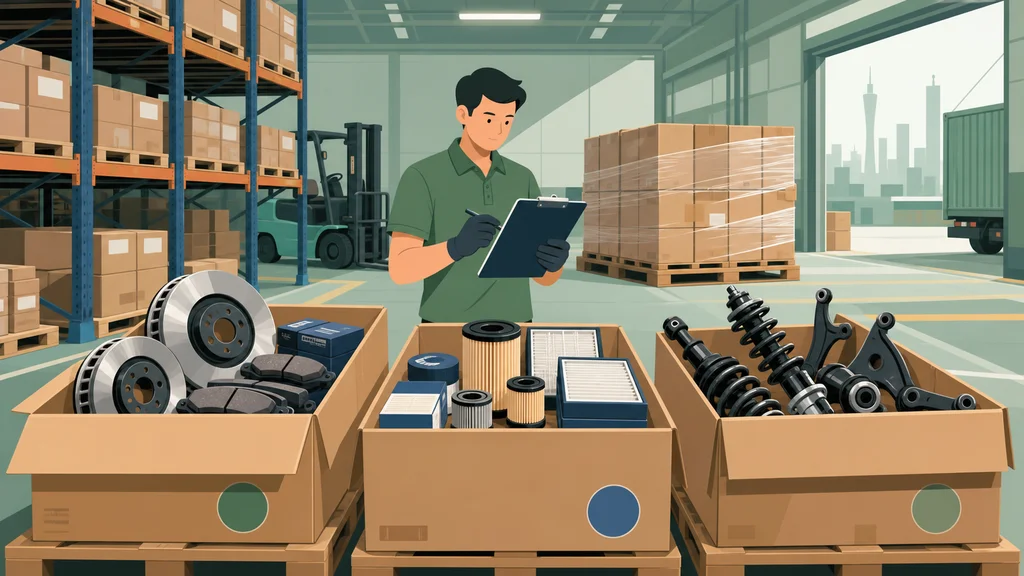
Quick Summary: A China warehouse service for auto parts importers should not be judged by storage space alone. The real work is receiving supplier goods, identifying cartons, checking quantities and visible details, holding unclear items, consolidating confirmed goods, updating the dashboard, and preparing a clean handover before shipment. For buyers working with several Chinese suppliers, the warehouse is where supplier promises become a shipment batch the buyer can actually use.
A Warehouse Address Is Not the Same as Warehouse Control
Many buyers ask for a warehouse address in China. I understand why. They have several suppliers, they need one place to receive goods, and they do not want every small supplier shipping directly overseas.
But an address only solves the first inch of the problem.
If cartons arrive and nobody connects them to the supplier, order line, quantity, and shipment decision, the buyer still does not control the order. The goods are physically in China, but commercially the order is still unclear.
That is why I do not like treating warehouse service as storage. For auto parts importers, the warehouse is the operating point between supplier delivery and international shipment. It is where the order is received, checked, separated, held, consolidated, documented, and then handed to the shipping side.
Before Goods Arrive, the Warehouse Needs an Order Sheet
A serious warehouse service starts before the first carton reaches the door.
We need the buyer's supplier links, 1688 pages, quotations, purchase list, quantities, urgent items, destination, and shipment timing. From that, we create a supplier-by-supplier order sheet. The order sheet shows what each supplier should send, which lines are urgent, which details need checking, and which goods should join the same shipment batch.
This is not office work for the sake of office work. It is what lets the warehouse team identify cartons when they arrive.
A supplier may write only a short Chinese name on the carton. A courier label may show a phone number but not the buyer's order reference. A 1688 seller may send a small box without any useful mark. If we already have a receiving plan and order sheet, those cartons can be matched. If not, the warehouse is guessing.
Receiving Means Identifying, Not Just Signing
When goods arrive, the first question is not "where do we put this?" The first question is "what is this, and who sent it?"
For each inbound delivery, we register supplier name, arrival date, domestic tracking record where available, carton count, and the order lines the cartons appear to match. If the carton mark is clear, the goods can move into the next checking step. If the mark is unclear, the carton is held as unidentified. We photograph the outside carton and shipping label, then match it through courier records, supplier messages, item appearance, and the buyer's order list.
I would rather spend time identifying a carton in Guangzhou than let an anonymous box join an export shipment. In a mixed auto parts order, anonymous cartons are where many later mistakes start.
The Checks Depend on the Part, Not on a Generic Form
Not every warehouse check needs to be deep inspection. But every check should be connected to the actual order.
For simple lines, the useful check may be carton count, received quantity, and visible packaging condition. For OE-based parts, we read the OE reference on the label, packaging, or part where visible and match it to the buyer's order line. For left/right parts, we check OE suffix, part-number marking, physical shape, mounting direction, or buyer-approved reference image. For electrical parts, we compare connector shape, pin count, voltage label such as 12V or 24V, and function notes such as heated or folding when those details matter.
Door parts are a good example. A window regulator can look similar but fit the wrong side. A mirror assembly may have a different connector or missing function. A door control switch may have the right general shape but the wrong pin count. If the buyer's order relies on those differences, the warehouse check has to look at those differences.
This is practical pre-shipment control. It is not a laboratory test, and I do not want to oversell it. But it is much stronger than receiving cartons blindly and trusting supplier photos.
Problem Goods Should Be Held, Not Hidden Inside the Shipment
A useful warehouse service is tested when something is not clear.
If a supplier ships short quantity, the warehouse should compare received quantity with the order sheet, mark the shortage, photograph evidence where useful, and keep that line open. The buyer should see the options: wait for the balance, ask the supplier to resend, accept a credit, ship confirmed goods first, or leave the shortage for the next batch.
If the supplier sends the wrong model or unclear label, the line should be held before consolidation. We photograph the label, product, connector, side marking, or visible mismatch and send the issue back to the supplier or buyer for a decision. The status should not say ready while the question is still open.
If packaging is damaged, wet, crushed, or opened, we photograph it before repacking. Then we classify the issue: outer carton only, product exposure risk, missing accessory risk, supplier replacement needed, or repacking enough.
If a supplier is late, the warehouse record should show that the line is still pending. It should not disappear into a vague "almost ready" update. The buyer may decide to wait, split the shipment, move urgent checked goods first, or push for replacement supply.
This is why warehouse control matters. The buyer is not paying for someone to say goods arrived. The buyer is paying for someone to stop unclear goods from becoming export cargo.
Live Tracking Should Reflect Real Warehouse Work
A dashboard is only useful if it is built on real receiving and checking.
For auto parts warehouse service, useful statuses are specific: supplier pending, domestic tracking received, goods arrived, quantity checked, label/model issue, waiting for buyer confirmation, consolidated, documents preparing, and ready for handover.
If the dashboard only says "processing," the buyer is still blind. If it shows that brake pads and filters are checked while one door switch is held for connector confirmation, the buyer can make a real decision. Ship the checked goods first? Wait for the switch? Replace it? Move it to the next batch?
That is the value of Live Tracking and order dashboard updates. It does not replace inspection. It makes the warehouse stage visible so the buyer can decide before shipment.
Consolidation Starts After the Order Is Clear
Many buyers think consolidation means putting cartons together. Physically, yes. Operationally, no.
Before consolidation, the warehouse should know which supplier delivered, which lines are checked, which items are held, which cartons belong to the shipment batch, and which goods should be excluded. If that work is not done, consolidation only hides the confusion inside a bigger shipment.
For multi-supplier auto parts orders, we treat consolidation as a shipment decision. Ready goods join the batch. Held goods stay out. Delayed goods remain pending. Urgent goods may move first if the buyer needs stock. Slower lines can wait for rail, sea, or the next planned dispatch if that fits the buyer's order.
This is why warehouse service connects directly with China auto parts consolidation service. Receiving and checking create the facts. Consolidation uses those facts to build a clean outbound batch.
Before Shipping, the Handover Should Be Clean
A forwarder can move cargo, but the forwarder should receive a clear batch.
Before handover, the warehouse should know what is included, what is held back, carton count, visible issues, document preparation status, and whether the batch is ready for freight. If a line is excluded because the supplier needs to replace it, that should be clear. If the buyer approved shipping confirmed goods first, that should be recorded.
This is the difference between a China shipping agent vs order fulfillment partner. Shipping moves cargo. Warehouse fulfillment prepares the order so the cargo is worth moving.
How I Would Judge a Warehouse Partner
I would not start by asking how many square meters the warehouse has. I would ask how the warehouse works.
Can they create an order sheet before goods arrive? Can they register cartons by supplier? Can they identify unmarked cartons? Can they check OE references, left/right parts, connectors, and visible packaging issues when needed? Can they hold problem goods instead of pushing everything into consolidation? Can the buyer see status through a dashboard? Can they hand the forwarder a clear batch?
The answers tell you whether the company is offering storage or actual order control.
A passive warehouse keeps boxes. A useful China warehouse service for auto parts importers turns supplier deliveries into a controlled order.
Send the Order You Want Received
If you already have supplier links, 1688 pages, quotations, a purchase list, or a shipment plan, send them through our Contact Form.
BuyFromGuangzhou can help receive supplier goods in Guangzhou, register cartons, check quantities and visible details, hold problem lines, update the dashboard, consolidate confirmed goods, prepare export document information, and coordinate handover before the cargo leaves China.
FAQ
What is a China warehouse service for auto parts importers?
It is the China-side receiving and control stage before shipment. A useful warehouse service receives supplier goods, identifies cartons, checks quantities and visible details, holds unclear items, updates the dashboard, consolidates confirmed goods, and prepares handover to shipping.
Is warehouse service the same as storage?
No. Storage only keeps goods somewhere. Warehouse service for auto parts importers should also connect goods to the buyer's order list, register supplier deliveries, check what arrived, manage problem lines, and show shipment readiness.
What should be checked when auto parts arrive at the warehouse?
At minimum, supplier identity, carton count, received quantity, visible packaging condition, labels, model references, and carton marks should be checked. For variant-sensitive parts, OE numbers, left/right side, connector shape, pin count, voltage label, and buyer-approved images may also matter.
Can a warehouse handle goods from multiple Chinese suppliers?
Yes, but the warehouse should receive goods supplier by supplier and connect each delivery to the buyer's order sheet. If all cartons are mixed without records, the buyer may lose visibility before consolidation.
How does Live Tracking help during warehouse receiving?
Live Tracking shows what has arrived, what has been checked, which items have issues, what is waiting for buyer confirmation, and what is ready for consolidation or handover. It lets the buyer make decisions while goods are still in China.
Can a freight forwarder replace warehouse fulfillment?
A forwarder can move cargo, and sometimes receive cartons, but that is not the same as controlling the order before freight. Warehouse fulfillment checks, holds, records, consolidates, and prepares the batch before the shipping side takes over.
When should I contact a China warehouse service provider?
Contact one before suppliers start shipping, or at least before goods are handed to a forwarder. The earlier the warehouse team sees the supplier list and purchase plan, the easier it is to arrange receiving marks, checking, dashboard status, consolidation, and clean handover.