Quick Summary: A China auto parts consolidation service is not just putting several suppliers' cartons into one shipment. For an importer buying from multiple Chinese auto parts suppliers, consolidation should include receiving goods by supplier, matching cartons to the order list, checking quantities and visible details, holding problem lines, updating the dashboard, and releasing only a clear shipment batch. BuyFromGuangzhou handles this China-side middle step so the buyer can turn separate supplier deliveries into a shipment of approved goods, with unresolved quantities and items still recorded separately.
Consolidation Sounds Simple Until the Cartons Start Arriving
On paper, consolidation looks easy.
The buyer orders brake pads from one supplier, filters from another, sensors from a trading company, and a few door parts from 1688. Everyone ships to one Guangzhou address. The warehouse puts everything together. The forwarder moves it.
That is the clean version. Real orders are not that clean.
One supplier sends three cartons early with no buyer name on the outside. Another supplier says the goods are ready but does not provide domestic tracking. A small seller ships a box that looks like an accessory order but actually contains the fast-moving parts the buyer wants this week. One carton arrives damaged. One line is short. One item has the right OE number on the label, but the connector does not match the buyer's reference image.
This is why I do not treat consolidation as warehouse stacking. For auto parts importers, consolidation is the operating step that turns several separate supplier deliveries into one understandable shipment batch.
What a Real Consolidation Service Should Own
A basic warehouse can receive cartons. A freight forwarder can move cargo. A sourcing agent can talk to suppliers. But a real China auto parts consolidation service has to own the middle work before freight starts.
That middle work starts before the first carton arrives. Send the product list, quantities, destination and shipment priorities, together with any supplier links, quotations or orders you already have. If suppliers are still missing, we can help find them, clarify offers and purchase after your approval. We then connect the agreed orders to a supplier-by-supplier receiving sheet, including the references and checks needed for each line.
Without this record, consolidation becomes guesswork. A carton arrives, but nobody knows whether it is complete, which order line it belongs to, or whether it should wait for another supplier before shipment.
This is also where consolidation connects with auto parts order fulfillment in China. You can start with requirements that still need sourcing and approved purchasing, or hand over existing supplier orders. Consolidation covers the receiving, agreed checks and packing needed to bring those deliveries into a confirmed outbound batch.
First We Register Goods by Supplier, Not by Pile
The first practical rule is simple: goods should be received by supplier, not by pile.
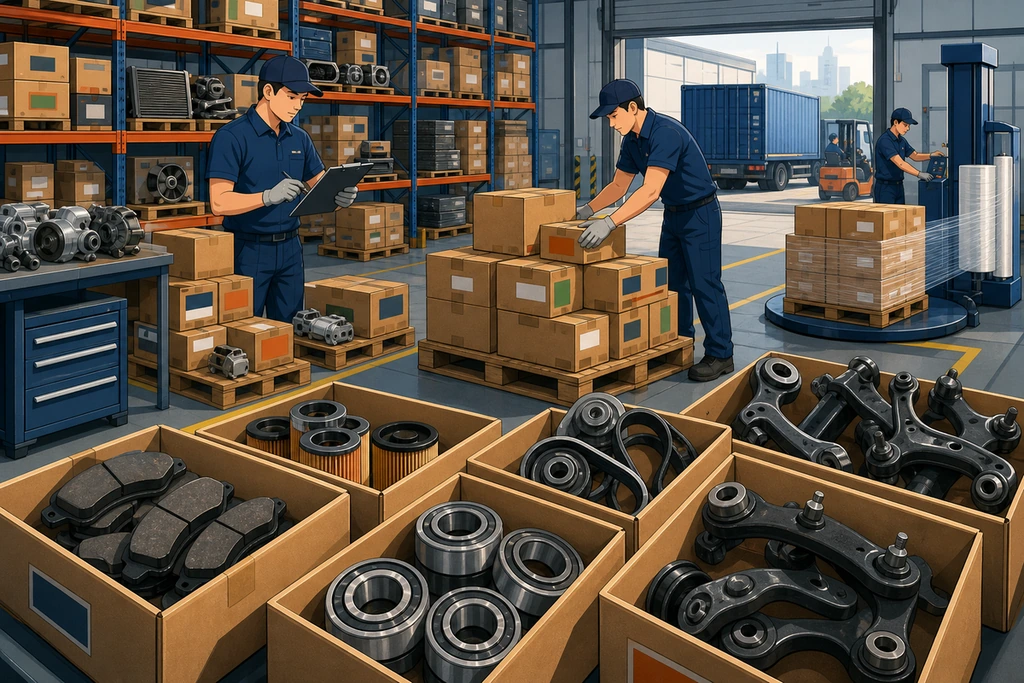
When a delivery arrives, we record supplier name, arrival date, domestic tracking where available, carton count, and the order lines the delivery appears to match. If the carton has a clear mark, the work is easier. If it has no useful mark, we do not treat it as ready cargo. We photograph the outside carton and shipping label, check courier records and supplier messages, and match it against the buyer's order list.
This step may sound basic, but it is where many consolidation mistakes begin. If five suppliers' cartons are pushed into one corner with no receiving record, the shipment may look physically together while the order is still commercially unclear.
I care about this because the buyer does not need to know that "boxes arrived." The buyer needs to know which supplier delivered, what quantity arrived, what is missing, and whether the goods can join the next shipment.
Then We Check What Needs to Be Checked
Consolidation does not mean every part receives deep technical inspection. But it also should not mean blind receiving.
We agree the checking scope before receiving. Carton registration records how many packages arrived; it does not establish the number of pieces inside. Where piece counting is agreed, we record the received quantity against the order line and its unit, such as individual parts, pairs or sets. Visible checks can cover packaging condition, markings, left/right side and connector details against the approved references. Reading a voltage or function label is not a functional test, and matching an OE reference or photograph does not establish vehicle fitment.
Door parts show why this matters. A mirror assembly, window regulator, lock actuator, or door control switch may look close enough in a supplier photo, but the wrong side or connector can make it unsellable for the buyer. So we use the OE number as the first identity check, then compare the physical part with the buyer's reference image and supplier photo when those references are available.
If the detail does not match, that line should not disappear into the consolidated shipment. It should be held, photographed, marked in the dashboard, and sent back to the supplier or buyer for a decision.
Problem Lines Should Be Held Before Consolidation
The dangerous moment is when a warehouse tries to make the shipment look complete before the order is actually clear.
If the agreed piece count shows a short line, we first check whether the order was split across packages or dispatches. We compare the purchase quantity and unit with the receiving record, supplier dispatch information and available domestic tracking. The issue record ties the supplier and order line to what was expected, what arrived, the difference and any useful photographs. We ask the supplier to confirm the balance or propose a remedy, then bring the available options back to the buyer. A resend, replacement or credit is not treated as agreed until the relevant parties confirm it.
If a received item differs from the approved reference, we hold the affected line separately and photograph the part, packaging label and specific mismatch. The supplier receives the order reference and a clear comparison: what was ordered, what arrived and what needs clarification. We follow up on the available return, replacement or correction, while the buyer approves the commercial decision. A supplier saying that a different part is an equivalent does not by itself resolve a fitment question.
If a supplier has not delivered, we keep the outstanding line separate from received goods. We check the dispatch and tracking information with the supplier and show the buyer what is still missing. The buyer can then decide whether to wait or release an identified batch of checked goods first. A supplier estimate is recorded as an estimate, not as a confirmed arrival date.
If a carton arrives damaged, wet, crushed or opened, we photograph its condition before repacking and record the affected order lines. We check the contents within the agreed scope, ask the supplier or carrier to address the issue where applicable, and explain the available next steps to the buyer. A sound outer carton alone does not prove that every part inside is undamaged.
This is where consolidation becomes a control service. The goal is not to move every carton as fast as possible. The goal is to move the right confirmed goods, with the unresolved lines clearly separated.
The Buyer Needs Shipment Decisions, Not Warehouse Noise
A buyer outside China does not need to hear every small warehouse movement. But the buyer does need clear decision points.
For an illustrative mixed order, some lines may be checked and ready while another is short and a third is held for a connector mismatch. Shipping the confirmed goods first is one option, but the buyer needs the included quantities, the held or missing quantities and the effect on packing and freight before approving it. We confirm what is practical with the forwarder; splitting a shipment is not a promise of faster delivery or lower cost.
This matters especially for small and medium auto parts importers. Their business often depends on regular replenishment, not one dramatic container shipment. A batch does not need to be perfect in the abstract. It needs to be clear enough for the buyer to decide whether it should move now or wait.
This is why we connect consolidation with regular auto parts shipments from China. If the receiving and checking process is visible, the buyer can run a shipment rhythm. If the consolidation process is vague, every batch becomes a chase.
What a partial-release decision should record
- Ship now: the approved order lines and quantities, linked to the outbound packing list and carton marks.
- Keep open: the quantities still missing and the goods physically held in China. An item that has not arrived must not be recorded as warehouse stock.
- Next action: the supplier follow-up, the buyer's decision and any confirmed replacement, return or later-batch arrangement. Outstanding costs or dates stay identified as unconfirmed.
Once the buyer approves the batch, we prepare the packing information for those goods. The remainder stays open against its original supplier and order line; releasing one batch does not close the whole purchase order.
Live Tracking Is Part of Consolidation, Not an Extra Feature
I do not see Live Tracking as software decoration. For consolidation orders, it is the buyer's view of the operating middle.
Live Tracking gives the buyer a view of actual order records and unresolved decisions. For consolidation, the useful information is which goods have arrived, what the agreed checks found and which lines still need a decision. Photos, issue notes and batch information should be read with their recorded context. An arrival record does not mean every piece was checked, and an order status is not automatic approval to ship.
Suppose the brake pads and filters are checked and ready, but a door switch is held because the connector pin count does not match the buyer-approved image. The dashboard should show both facts. The buyer should not have to ask whether the whole order is ready. The buyer should see that most goods are ready for consolidation, while one line is waiting for confirmation.
That is the practical value of Live Tracking and dashboard updates. It lets the buyer decide while the goods are still in China.
What Happens Before Handover to Shipping
A freight forwarder should receive a confirmed batch, not a mixed pile of supplier problems.
Before handover, the consolidation team should know what is included, what is held back, which suppliers delivered, which quantities were checked, which cartons belong to the shipment, and what document or packing information needs to be prepared. If an item is excluded because the buyer is waiting for replacement or credit, that should be clear before freight starts.
This is the difference between a China shipping agent vs order fulfillment partner. Shipping moves the cargo. Consolidation and fulfillment prepare the cargo so it is worth moving.
When the batch is clear, the shipping side can calculate weight, volume, route, and handover details with fewer surprises. When the batch is unclear, freight may still happen, but the buyer is exporting uncertainty.
What to Send Us for a Consolidation Assessment
Send your product list, quantities, destination and shipment priorities through our Contact Form. Add supplier links, quotations, paid-order details or tracking information where you have them; you do not need every field before making an enquiry. If you still need suppliers or purchasing help, our auto parts sourcing and order service can cover that stage after the scope and purchases are approved.
We can assess the China-side work required: supplier coordination, receiving, the agreed quantity and visible-reference checks, issue follow-up, packing, consolidation, document preparation and freight handover. We agree the checking scope and responsibilities before work starts. Reference checks are not a promise of fitment or specialist testing.
FAQ
What is a China auto parts consolidation service?
A China auto parts consolidation service receives goods from different Chinese suppliers, checks what arrived, separates problem lines, combines confirmed goods, and prepares one outbound shipment. For importers, the value is not only lower freight complexity, but clearer control before the goods leave China.
Can I consolidate orders from several 1688 and factory suppliers?
Yes. The key is to create a supplier-by-supplier order sheet before goods arrive, then register each delivery when it reaches the warehouse. Small 1688 boxes and factory cartons should not be mixed blindly; they need to be matched to the buyer's order list.
What should be checked before consolidating auto parts?
Agree the scope first. Receiving records identify the supplier, packages and order lines. Piece counting, packaging checks and comparisons of markings, side or connectors are separate tasks to specify. A carton count is not a piece count; an OE or image match does not prove fitment or function.
What happens if one supplier is delayed?
Keep the outstanding line open and check the supplier dispatch information and available tracking. The buyer can approve waiting or shipping an identified batch of checked goods first. The released quantities belong on that batch packing list; missing and held goods remain separately recorded for follow-up.
Does consolidation include inspection?
It can include the quantity and visible checks agreed for the order. These may cover carton condition, labels, part markings and visible differences from approved references. Functional, durability or laboratory testing is outside those checks unless separately confirmed; do not infer it from a receiving photo or dashboard status.
How does Live Tracking help with consolidation?
Live Tracking shows which suppliers have delivered, which goods were checked, which items are held, what is missing, and whether the shipment batch is ready for handover. It turns consolidation from a warehouse pile into a visible decision process.
When should I contact a consolidation partner?
Contact us when you have a product requirement or an existing supplier order. Starting before dispatch helps us agree receiving marks and checks, but you do not need to have purchased first. If goods are already moving, send the available order and tracking information so we can assess the remaining work.