
Quick Summary: China Auto Parts Quality Control: What Happens Between Order and Shipment is not only a supplier question. For an importer, the real risk is what happens after payment: whether the goods match the order, whether cartons are clear, whether delays are visible, and whether someone in China checks the problem before export.
Most importers lose money on quality not because they chose the wrong supplier — but because nobody was watching after the deposit was paid.
This is what actually happens in a factory between your order confirmation and the shipping date.
Raw Materials Come In First
Before a single part is made, the materials arrive. Steel, aluminum alloy, rubber compounds — each batch is different. The sample your supplier sent you was made with good material. The production run might not be.
We check incoming raw material certificates and physically inspect the stock. If the alloy grade is wrong at this stage, no amount of machining will fix it later.
The First Article Sets the Standard
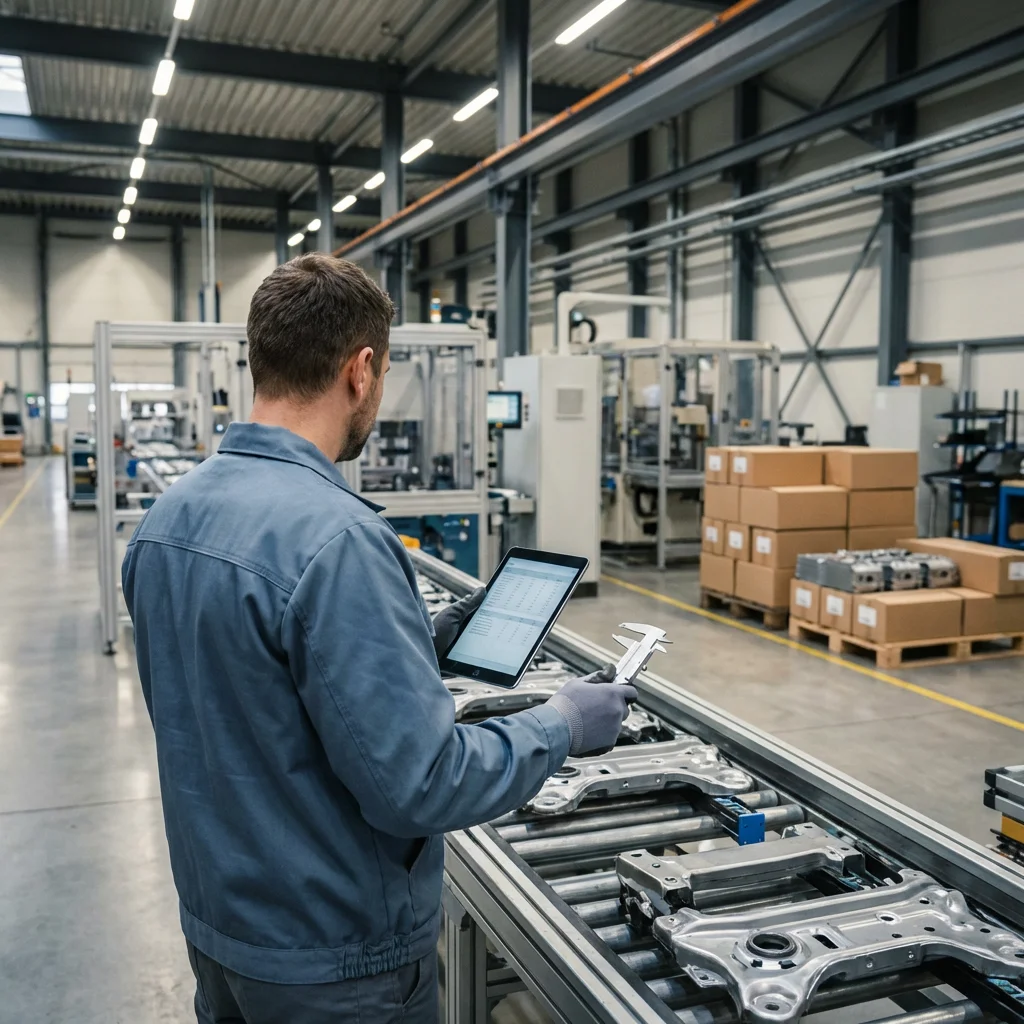
The first part off the line after tooling is set up is the most important piece in your entire order. It gets measured against the approved sample on every dimension — thread pitch, surface finish, hole positions, coating thickness.
If it passes, production continues. If it doesn't, we stop the line before 500 defective parts are sitting in a box with your name on it.
Unannounced Mid-Production Checks
Factories perform well when they know they're being watched. We drop in during production without notice and pull parts directly from the line. We're looking at weld quality, coating consistency, and whether workers are actually following the agreed process — or cutting corners to hit a deadline.
This is where most quality problems are caught, and caught early enough to fix without rework.
Pre-Shipment Inspection
Before the container is loaded, we run a final check using AQL 2.5 sampling standards. Every carton is verified against the packing list. Function tests are done on mechanical parts where applicable.
This is also when we check the labels, part numbers, and packaging against what your end customer expects to receive.
What Third-Party Inspectors Miss
Inspection companies follow checklists. They measure what's on the paper. What they often miss is the context — a disorganized warehouse where parts are getting scratched, a QC supervisor who doesn't have the authority to stop the line, or a factory running your order on a night shift with different workers than the ones who made the sample.
These are things you only notice when you've spent enough time inside Chinese factories to know what normal looks like.
What This Means for Your Orders
If you're shipping auto parts to Europe without any on-the-ground oversight between order and shipment, you're taking a risk that your insurance policy won't fully cover — because defective parts that reach your warehouse cost more than their replacement value.
If you want to know what a proper QC process looks like for your specific product category, send me a message. We can walk through it based on what you're actually buying.
If you are comparing whether you need supplier search or order execution support, read our guide on China sourcing vs order fulfillment. If the order already has suppliers but needs receiving, checking, consolidation, or shipment control, our article on auto parts order fulfillment in China explains the middle work. You can also see how we keep buyers updated through Live Tracking.
If you want us to look at your supplier links, quotation, packing list, or order plan, send it through our Contact Form. I can usually tell quite quickly whether the risk is supplier quality, quantity control, packaging, unclear labels, or shipment timing.
FAQ
What should I check before paying a Chinese auto parts supplier?
Before payment, check whether the supplier can confirm the exact part, quantity, packaging, delivery time, and carton marking. I also want to know who will check the goods after they leave the supplier, because many mistakes only become visible when cartons arrive at a warehouse.
Can a freight forwarder replace order fulfillment support?
Usually no. A forwarder can move cargo, but they normally do not own the commercial accuracy of the order. They may receive cartons without checking whether the part number, quantity, label, or packaging matches what the buyer actually ordered.
Why does Live Tracking matter for China auto parts orders?
Live Tracking matters because the buyer needs visibility before export. The useful questions are simple: what arrived, what is missing, which supplier is late, which carton has a problem, and whether the shipment is really ready to leave China.