
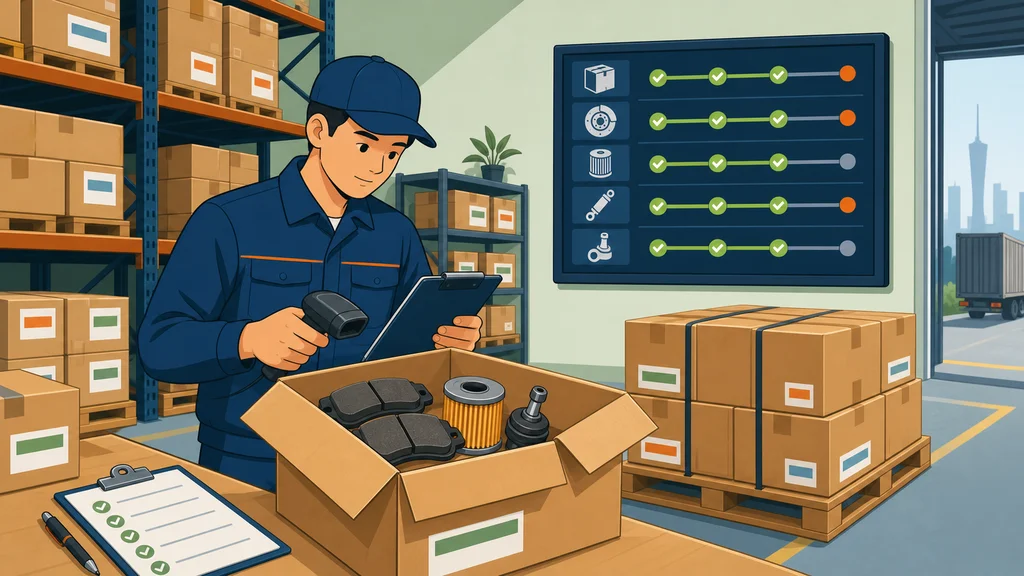
Quick Summary: China auto parts order tracking should show more than a courier number or a supplier's message saying "ready." For an importer with suppliers and orders already in place, it should show which goods have arrived, what has been checked, what is missing, and what can actually be sent by air, rail or sea. Live Tracking is useful because it makes China-side execution visible while decisions can still be made. If a team is handling your order in China, you should be able to see the work being done before the shipment leaves.
If Someone Handles the Order in China, the Work Should Be Visible
An importer buying auto parts from China does not always need another supplier search. Many already have factory contacts, 1688 links, quotations, repeat purchase lists or a stock replenishment plan from their own customers.
What they need is much more practical: the parts have to be bought or collected, received, checked, combined and sent out on time. That is the job of auto parts order fulfillment in China.
From outside China, this work becomes difficult to judge through chat. A supplier can say that brake pads are finished. Another can send a photo of filters on a table. A domestic courier can show a delivery scan. None of those answers tells the importer whether the full order is coming together, whether the right quantities were received, or whether there is enough confirmed stock to meet the next shipment plan.
My view is simple: if a China-side team is paid to execute an order, visibility should be part of the work. The buyer should not need to ask repeatedly for basic order status while also answering their own customers about delivery.
What China Auto Parts Order Tracking Should Actually Show
A tracking number is for a parcel. An order dashboard is for a business decision.
For a mixed or repeated auto parts order, the useful status is connected to the purchase list. It should make clear which supplier the goods came from, which order lines have arrived, whether quantity checking has been completed, whether label or packaging checks are pending, and whether the goods have moved into consolidation or shipment preparation.
That matters because the importer is not watching boxes for curiosity. They may need to tell a workshop customer whether an item can ship this cycle, decide whether to wait for a delayed supplier, or approve an air shipment for urgent lines while other stock follows by rail or sea.
A practical dashboard can show:
- Supplier and purchase order reference;
- Goods not yet received, partially received or fully received;
- Carton count and quantity-check status;
- Photos or notes where a model, label, packaging condition or shortage needs confirmation;
- Consolidation and document-preparation status;
- Whether a shipment batch is ready to be handed over for the planned transport method.
This is not a promise that every issue disappears. It is a way for the importer to know where the order stands while there is still time to give an instruction.
The Dashboard Must Be Backed by Physical Work
A status board has no value if somebody is only copying supplier messages into it. "Ready" entered from WeChat is still only a supplier statement.
The useful update happens after an actual operation in China: goods have been received at the warehouse, cartons have been identified, quantity has been checked against the list, visible packaging has been looked at, and a problem has been recorded if something does not match.
This is why a China warehouse service for auto parts importers is not merely a storage address. The receiving point is where separate supplier deliveries become a controlled order. If the warehouse does not connect cartons to the buyer's list, the importer has storage, but still does not have control.
For auto parts, even a basic check has commercial value. A carton with an unclear OE reference, short quantity, crushed packing or a supplier label that cannot be matched to the order needs attention before it joins the outbound shipment. It is cheaper and faster to ask the supplier while the goods are still local than after a customer overseas is waiting for the part.
Live Tracking Matters Most When Several Suppliers Are Moving
One supplier is often manageable. With several suppliers, the question quickly changes from "has this factory shipped?" to "can this shipment leave without holding back the buyer's sales plan?"
Consider a normal replenishment order: brake pads arrive first, filters are due tomorrow, sensors have been delivered but need label confirmation, and a box of small electrical parts is still not dispatched. A buyer does not need four separate conversations. The buyer needs one view that shows what can move, what cannot, and why.
That is the operating issue behind buying from multiple Chinese auto parts suppliers. Goods from different sellers do not become one usable export shipment merely because each supplier says their own part is finished. Someone has to receive, register, check and combine them.
With Live Tracking, the importer can see whether the current shipment batch is complete or whether one delayed line requires a decision. Sometimes waiting makes sense. Sometimes urgent goods should go by air while regular replenishment is prepared for rail or sea. The professional part is not using one transport method every time. It is making the status clear enough for the buyer to choose the right dispatch plan.
What This Tells a Buyer About a Fulfillment Team
When a buyer chooses a team in China, price is only one part of the decision. The bigger question is whether that team can be trusted with orders that directly affect the buyer's stock and customers.
Live Tracking makes that easier to judge because it turns service claims into visible execution. A team either records supplier arrivals and check results clearly, or it does not. It either shows the open items before shipment, or the buyer learns about them too late. It either keeps the order moving against a shipment plan, or leaves the buyer to chase status messages.
This is also why I do not describe order fulfillment as an optional administrative service. For an importer building an auto parts supply strategy from China, the China-side team is part of the operating model. Someone must receive the products, verify the agreed checks, organize the consolidated shipment, prepare or coordinate the required information, and hand cargo over for transport. Visibility is evidence that this work is actually being controlled.
When Live Tracking Is Worth Asking For
If you place one simple order with one familiar supplier and ship it directly, you may not need a detailed order dashboard. A basic update can be enough.
But it becomes worth asking for when you buy repeated batches, purchase many SKUs, use several suppliers, replenish stock for your customers, or need to decide how and when confirmed goods should ship. In these orders, unclear status slows the buyer down. It can also make a China-side team look unreliable even if cartons are physically moving, simply because nobody has made the work visible.
Before choosing a fulfillment partner, ask to see how order status will be updated. Will you know what has arrived? Will check results and open problems be visible? Will consolidation and shipment readiness be shown? Can you see whether goods are prepared for the transport plan you approved? Clear answers are more useful than general statements about service quality.
Send the Order You Already Have
If you already have auto parts supplier links, quotations, a purchase list or a replenishment order that needs to be executed in China, send it through our Contact Form.
BuyFromGuangzhou can receive and check supplier goods in Guangzhou, consolidate confirmed orders, coordinate shipment preparation and show the order status through Live Tracking and dashboard updates. The first useful step is not a long proposal. It is looking at your order list and confirming what needs to be controlled before the goods move.
FAQ
What is China auto parts order tracking?
China auto parts order tracking is a visible record of what happens to an importer's order before shipment. It should show supplier delivery status, received goods, checking status, open issues, consolidation progress and shipment readiness, not just a domestic courier number.
Is Live Tracking the same as international shipment tracking?
No. International shipment tracking begins after cargo is dispatched. Live Tracking for order fulfillment covers the earlier work in China: receiving parts from suppliers, checking the agreed details, resolving open items and preparing the shipment for handover.
What can an importer see on an auto parts order dashboard?
A useful dashboard can show which suppliers have delivered, which purchase lines were received, carton and quantity status, photos or notes for issues, consolidation status and whether goods are ready for the planned shipment. The exact checks depend on the order and the products.
Does Live Tracking replace inspection?
No. A dashboard records work and results; it does not replace the agreed level of checking or inspection. Its value is that the buyer can see what has been completed, what needs confirmation and what remains unresolved before export.
Can Live Tracking support air, rail and sea shipments?
Yes. The purpose is to show which goods are ready and which are not, so the buyer can organize a suitable dispatch plan. Urgent lines may need air shipment, while regular replenishment may suit rail or sea depending on the order and destination.
When should an auto parts importer use a China-side fulfillment team?
It is most useful when the buyer already has suppliers or orders but needs someone in China to execute them: receiving goods, checking agreed details, consolidating cartons, preparing shipment information and keeping the process visible. This is especially relevant for repeated orders and purchases from multiple suppliers.