
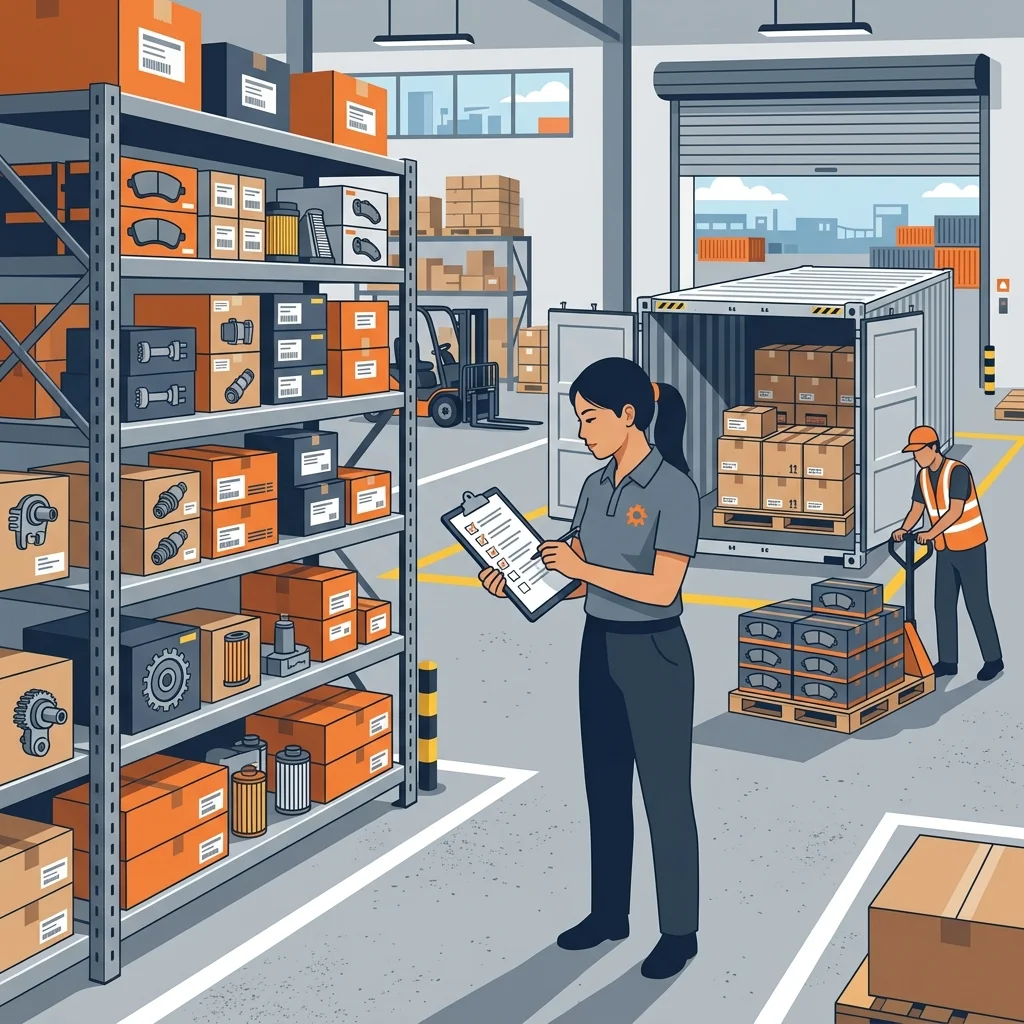
Quick Summary: A China fulfillment partner for small importers is not mainly about finding more suppliers. It is about making a small-batch, many-SKU auto parts buying strategy actually work after the buyer places orders with different Chinese suppliers. The fulfillment partner receives goods, checks quantities and visible details, holds unclear items, consolidates confirmed stock, updates the dashboard, and prepares the batch for shipping. For small auto parts importers, this China-side execution layer is often what decides whether supplier links become sellable inventory.
Small Importers Do Not Fail Because They Are Small
I do not think small auto parts importers have a weak business model. In many cases, the model is smart: buy many fast-moving SKUs in smaller quantities, test demand, replenish often, and avoid tying all cash into one container of slow stock.
The problem starts when that strategy is managed from outside China with no local execution layer.
A small importer may order brake pads from one supplier, filters from another, sensors from a trading company, a few door parts from 1688, and some slow-moving electrical items from an old WeChat contact. Each supplier only sees their own order. Nobody on the supplier side is thinking about the buyer's full shipment, stock priority, weekly dispatch plan, or downstream customers waiting for those parts.
That is why a small importer needs a China-side fulfillment partner. Not because the buyer cannot negotiate. Not because the buyer cannot find suppliers. Because the buying strategy itself depends on someone in China receiving, checking, organizing, consolidating, and releasing the goods in a controlled way.
The Real Job Starts After Supplier Payment
Before payment, everything feels clear. The buyer has links, photos, quoted prices, maybe even OE references and delivery promises. After payment, the order becomes physical. Cartons move. Suppliers delay. Domestic couriers arrive at different times. Some cartons have marks, some do not. A photo from one supplier may prove that one box exists, but it does not prove the whole order is correct.
This is where we usually enter the work.
First we turn the buyer's supplier links, 1688 pages, quotations, and purchase list into a working order sheet. That sheet is not decoration. It tells us supplier name, item description, buyer order line, quantity, model or OE reference, urgent SKUs, expected delivery, and any packaging or label notes. For auto parts with variants, we add the details that matter: left/right side, connector shape, pin count, voltage label, buyer-approved image, or supplier reference photo where available.
Without this order sheet, the warehouse can only receive boxes. With it, we can ask the right question when a carton arrives: which supplier sent this, which line does it belong to, and can it move forward?
Why Supplier Follow-Up Alone Is Not Enough
Many buyers think the main job is asking suppliers for updates. That is part of the work, but it is not enough.
A supplier can say "ready" while the goods are still sitting in their warehouse. Another supplier may send a domestic tracking number but ship only part of the order. A small 1688 seller may send the correct item but without a useful carton mark. A factory sales person may promise two days because the warehouse told them "almost ready," not because the cartons are actually packed.
From Europe or the Middle East, the buyer receives fragments. From Guangzhou, we can connect those fragments to physical receiving. When goods arrive, we register supplier name, arrival date, domestic tracking where available, carton count, and the order lines the cartons appear to match. If the mark is unclear, the carton is not treated as ready. It is photographed, held, and matched through courier record, supplier message, item appearance, or the buyer's order list.
That is the first difference between remote supplier management and auto parts order fulfillment in China. One is asking what happened. The other is recording what physically arrived.
Small Orders Need More Control, Not Less
Large orders are not easy, but at least they often have one factory, one container plan, and one production schedule. Small auto parts orders are different. They contain many lines, many suppliers, many small boxes, and many chances for small confusion.
A small importer cannot afford to treat these details casually. One missing carton may contain the fast-moving parts needed for this week's customers. One wrong left/right item may become dead stock. One unclear carton mark may create receiving confusion at the buyer's warehouse. One delayed supplier may block the whole batch if nobody separates ready goods from pending goods.
This is why I do not see fulfillment as a cost added to a small order. I see it as the operating system that lets the small-order strategy work. If the buyer wants to buy small quantities from several suppliers and ship regularly, someone must own the middle: receiving, checking, issue handling, consolidation, dashboard updates, and handover.
What We Actually Check Before Consolidation
Not every auto parts order needs a deep inspection. I do not want to pretend that every small shipment requires laboratory testing or full teardown inspection. But every shipment needs the right level of pre-shipment control.
For simple lines, we check received quantity or carton count against the order sheet and record visible carton condition. For OE-based items, we read the OE reference on the label, packaging, or part where visible and match it to the buyer's order line. For left/right parts, we check OE suffix, part-number marking, physical shape, mounting direction, or buyer-approved image. For electrical items, we compare connector shape, pin count, voltage label such as 12V or 24V, and function notes such as heated or folding when those details are relevant.
Door parts are a good example. A window regulator, lock actuator, mirror assembly, or door control switch may look close enough in a supplier photo, but the side, connector, or function may be wrong. We first use the OE number as the identity code where it is visible. Then we cross-check the physical part against the buyer's own reference image and the supplier's photo. If the visible details do not match, that line is held before consolidation.
This is also why a useful auto parts inspection report should not be treated as a generic pass/fail paper. The useful part is whether the check connects to the actual order line and the buyer's selling reality.
What Happens When a Supplier Makes a Mistake
This is where a fulfillment partner proves value. Not when everything goes smoothly, but when normal supplier problems appear.
If a supplier ships short quantity, we compare received quantity against the order line, mark the shortage in the dashboard, photograph evidence where useful, and keep the line open. The buyer then has real options: wait for the balance, ask the supplier to resend, accept a credit, ship confirmed goods first, or hold the line for the next batch. The close-out should also be visible: balance received, credit accepted, buyer approved short shipment, or held.
If a supplier sends the wrong item or an unclear model, we hold the line before it joins the shipment. We photograph the label, product, connector, side marking, or visible mismatch and write the issue plainly for the supplier: this is what arrived, this is what the order requires, please confirm return, replacement, release, or correction. A wrong small 1688 item is usually not a disaster when it is caught in China. It becomes expensive when it is discovered after the cargo reaches the buyer's warehouse.
If a supplier delays, we do not only repeat "they said tomorrow." We record the promised date, the current supplier answer, domestic tracking evidence if any, and whether that line blocks the shipment. If enough confirmed goods are ready, the buyer can decide whether to split the shipment and move stock first. This matters for small importers because regular replenishment is often more valuable than waiting forever for one slow supplier.
If packaging is damaged or the carton arrives wet, crushed, or opened, we photograph it before repacking or moving it further. Then we classify the issue: outer carton only, product exposure risk, missing accessory risk, supplier replacement needed, or repacking enough. The point is not to create a beautiful report. The point is to prevent unclear goods from quietly becoming export cargo.
When we find these issues during receiving or checking, we usually flag them the same working day. I prefer that honest operating standard to fake fixed response promises. The important thing is that the buyer sees the issue while the goods are still in China and can make a decision before export.
Consolidation Is Not Just Putting Cartons Together
For small importers, consolidation is often the heart of the business model. The buyer cannot ship every supplier's small order separately. Freight cost, local charges, documents, and receiving work would eat the margin.
But multi-supplier auto parts consolidation is not simply putting cartons on one pallet. Before goods are consolidated, they should be identified, checked, and assigned to a shipment batch. Ready goods should be separated from held goods. Urgent SKUs should be visible. Missing supplier lines should not be silently treated as arrived.
In practice, a small importer may have three possible decisions every week: ship this confirmed batch now by air, wait two more days for a delayed supplier, or move the slow line to the next rail or sea shipment. Those decisions cannot be made from supplier messages alone. They need a clear view of what is physically in the warehouse.
This is why consolidation belongs inside fulfillment, not only freight. Freight moves cargo. Fulfillment prepares a batch worth moving. We explain that role difference separately in China shipping agent vs order fulfillment partner.
Live Tracking Is How the Buyer Sees the Work
A small importer usually cannot fly to China for every shipment. That does not mean the buyer should be blind.
Live Tracking and order dashboard updates matter because they make execution visible. The dashboard should show more than "processing." It should show supplier pending, domestic tracking received, goods arrived, quantity checked, label/model issue, waiting for buyer confirmation, consolidated, documents preparing, and ready for handover.
For example, if brake pads and filters are checked and ready but one door switch is held because the connector pin count does not match the buyer-approved image, the dashboard should show both facts at the same time. The buyer can then decide whether to replace that switch line, hold the whole batch, or ship the confirmed goods first.
This is one of the strongest reasons to work with a professional China-side fulfillment team. The buyer does not just hear "we are handling it." The buyer sees what arrived, what is missing, what has a problem, and what can leave.
Regular Dispatch Makes Small-Batch Buying Work
Small importers often need rhythm more than dramatic one-time savings. If a buyer's business depends on fast-moving SKUs, the useful question is not only "can we make this shipment cheap?" It is also "can we keep stock moving regularly?"
For some buyers, that may mean air shipments when urgent replenishment is needed. For others, it may mean rail or sea shipments when the batch is large enough and timing allows. The route depends on the order, destination, cost, and urgency. The fulfillment team's job is to prepare the batch clearly so the shipping side can move it through the suitable channel.
We do not need to pretend every order can leave on a fixed schedule. Suppliers delay, holidays interrupt, and some items need confirmation. But when receiving, checking, dashboard status, consolidation, documents, and handover are organized, the buyer has a much better chance of running regular replenishment instead of emergency chasing.
That operating ability is what separates a useful fulfillment partner from someone who only gives a warehouse address.
When a Small Importer Can Handle It Alone
Not every buyer needs a fulfillment partner for every order. If the order has one reliable supplier, one simple SKU, clear packaging, and direct shipment to a forwarder, the buyer may manage it with supplier photos and normal freight support.
The situation changes when the buyer has several suppliers, many SKUs, small 1688 orders, repeated replenishment, unclear carton marks, OE-based items, left/right variants, electrical parts, or a need to ship in regular batches. At that point, the buyer is not only buying products. The buyer is running a small China-side operation from overseas.
If there is no local fulfillment partner, the buyer becomes the remote project manager for every supplier, carton, issue, and shipment decision. That is usually the wrong job for the buyer. The buyer should be selling stock, serving customers, and planning replenishment. The China-side team should be controlling the order before shipment.
Send the Order You Want to Run
If you are a small auto parts importer and already have supplier links, 1688 pages, quotations, or a purchase list, send them through our Contact Form.
We can look at the order structure and tell you what needs to be handled in China: supplier follow-up, receiving plan, quantity check, OE or model check, issue handling, consolidation, Live Tracking setup, export document preparation, and shipping handover. The first question is simple: can this order be turned into a clear, checked, dispatchable batch?
FAQ
Why do small auto parts importers need a China-side fulfillment partner?
Small importers often buy many SKUs from several suppliers in smaller quantities. A China-side fulfillment partner helps turn those separate supplier orders into one controlled shipment by receiving goods, checking details, handling issues, consolidating confirmed items, and preparing handover to shipping.
Is fulfillment only useful for large auto parts importers?
No. Small importers may need fulfillment even more because their orders are often mixed, frequent, and supplier-diverse. The smaller the shipment, the more important it is to avoid wasted freight, unclear cartons, wrong items, and scattered supplier updates.
What should a fulfillment partner check for small auto parts orders?
At minimum, the team should check supplier identity, quantity, carton count, visible packaging condition, labels, model references, and carton marks. For variant-sensitive parts, they should also check OE numbers, left/right side, connector shape, pin count, voltage label, and buyer-approved images where relevant.
Can a fulfillment partner help with regular auto parts replenishment?
Yes, if the order structure supports it. A fulfillment partner can receive supplier goods, separate ready and held items, consolidate confirmed batches, prepare documents, and coordinate handover for air, rail, sea, or another suitable route based on urgency and cost.
How does Live Tracking help a small importer?
Live Tracking shows what is happening in China while the buyer is overseas. It should show supplier pending, goods arrived, quantity checked, issue pending, consolidated, documents preparing, and ready for handover, so the buyer can decide whether to wait, split, replace, or ship confirmed goods first.
What happens if a supplier sends the wrong part?
The line should be held before consolidation. The fulfillment team should photograph the label, product, connector, side marking, or visible mismatch, compare it with the order line and buyer-approved reference, contact the supplier for return or replacement, and release the line only after the decision is clear.
When should I contact a fulfillment partner?
Contact one before suppliers start shipping, or at least before goods are handed to a forwarder. The earlier the fulfillment team sees the supplier list and purchase plan, the easier it is to organize receiving, checking, consolidation, dashboard updates, and shipment handover.