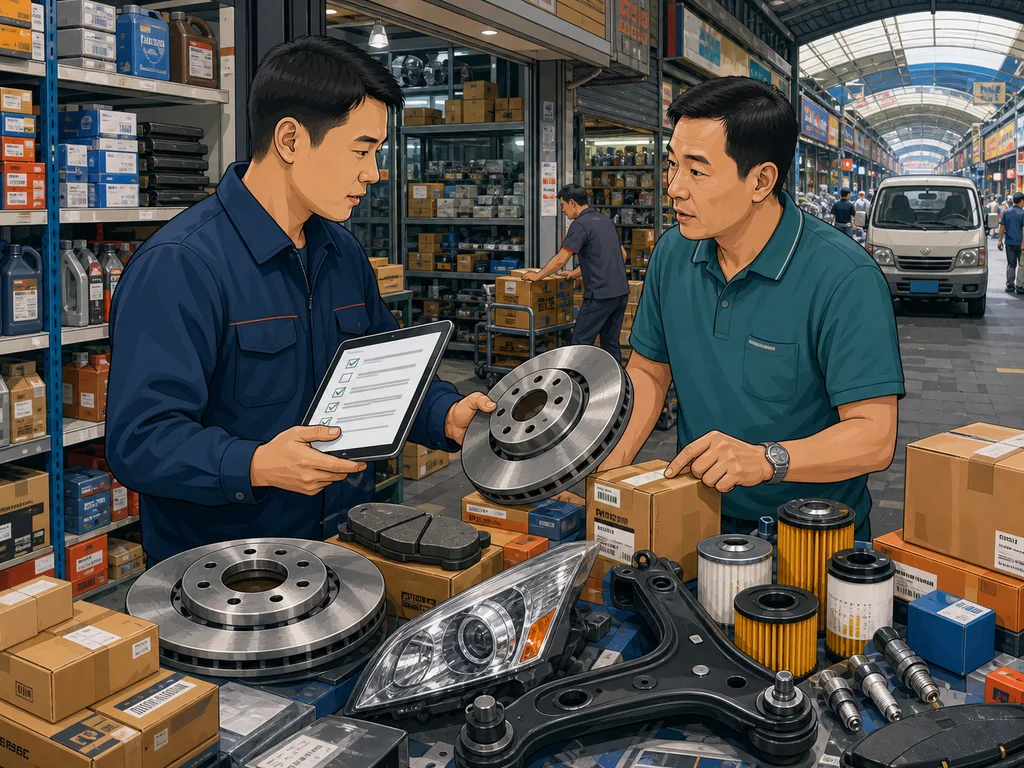
Quick Summary: The term Guangzhou auto parts market covers several trading areas, including Yongfu Road, Guangyuan Road, Sanyuanli and Chentian-related channels. Yongfu Road and nearby areas are useful starting points for new aftermarket and service parts, while used or dismantled spare parts are more closely associated with Chentian-related channels. Before payment, confirm supplier identity, exact part or OE reference, quantity, visible condition, left/right or connector details, packing, delivery timing and how each line will be identified. Purchases from several shops still need one Guangzhou team to receive, check, hold or release, and consolidate the goods before export.
A buyer may come to Guangzhou with a list of brake pads, filters, sensors, lights, suspension parts, used body parts or small service items. The plan sounds simple: walk the market, find suppliers, compare prices, place orders, and ship everything back.
The reality is less neat. One supplier has stock today. Another says the matching side will arrive tomorrow. A third can give a better price but needs two days to pack. Some items are sold from a shop counter, some from a nearby warehouse, and some are sent later by domestic courier. By the end of the visit, the buyer may have supplier cards, WeChat contacts, quotations, paid deposits, photos and several promises. That is not yet a shipment.
When I look at a Guangzhou market order, I do not only ask where the buyer found the parts. I ask what must happen after the buying decision. Who will receive each supplier's goods? Who will check whether the delivered parts match the list? Who will hold missing lines, combine cartons, prepare documents and coordinate the forwarder handover?
That is the difference between a market visit and real China-side order execution.
Why buyers search the guangzhou auto parts market
The guangzhou auto parts market attracts importers because Guangzhou has a deep aftermarket trading base. Buyers may want to see physical stock, find small-batch suppliers, compare brands, ask for replacement models, or collect mixed parts that are hard to manage through one online supplier.
For some product lines, the market is useful because the buyer can move faster than a pure online search. A shop may show samples. A trader may know which warehouse has the part. Similar items can be compared side by side. If the buyer already understands the product, this kind of physical search can save time.
But market buying also creates a special execution problem. The goods may come from several shops and warehouses, not one factory shipment. The purchase list can change during the day. Some parts are available immediately while others are promised later. If nobody controls the order after the visit, the buyer may leave Guangzhou with more uncertainty than before.
Yongfu Road and nearby areas help with supplier discovery, not shipment readiness
Yongfu Road and the surrounding auto-parts trading streets are common starting points for new aftermarket parts. Buyers may find lights, accessories, service parts, electrical items, body parts, filters and many mixed categories around this kind of market area. Guangyuan Road and Sanyuanli are also often mentioned when buyers talk about Guangzhou auto-parts trading.
I treat these areas as supplier-discovery places. They help the buyer ask, compare and buy. They do not automatically create a controlled outbound shipment.
A shop may give a good quotation, but the buyer still needs to know whether the goods were actually packed, whether the quantity is correct, whether the label or model reference matches the order, and whether all suppliers have delivered before consolidation. A market supplier's message that goods are ready is not the same as export readiness.
This is why the order should move into auto parts order fulfillment in China after the purchase decision. The buyer has already done the market work. Now the physical goods must be controlled.
Chentian and used-parts buying need even clearer receiving control
Used or dismantled auto parts create another layer of judgment. Around Chentian and similar used-parts channels, buyers may look for body parts, lamps, modules, interior parts, mechanical assemblies or hard-to-find replacement items. The attraction is availability. The weakness is that every line must be identified carefully.
A used part may not have clean packaging. A carton mark may be written by hand. The part may need to be checked against a reference photo, visible number, mounting direction or buyer-confirmed detail. If several suppliers send parts to one address, unidentified cartons can become a real problem.
I would not push these goods straight into an export batch just because they arrived. The receiving step should connect each carton to supplier, purchase line, expected quantity and visible identity. If something is unclear, the line should be held and photographed before it joins the shipment.
That is not over-complication. It is how a buyer keeps market purchases from turning into destination-side confusion.
The real work starts when market goods leave the supplier
After the buyer finishes a market day, the order usually becomes scattered. One supplier may deliver to the Guangzhou warehouse. Another may ask the buyer to arrange pickup. Another sends domestic courier tracking the next day. A small item may be packed inside a larger carton. A missing accessory may be promised separately.
At this point, the buyer needs a local team that can turn scattered supplier movement into one visible order. Our receiving work for goods from China suppliers is built around that exact stage.
When goods arrive, we need the purchase list, supplier names, quantities, buyer part numbers or OE references where available, photos if the buyer has them, and any packaging or label requirement. Then each delivery can be checked against something real. Without that reference, a warehouse address only receives boxes.
For an importer, this is the point that decides whether the market trip was useful. Buying many lines is easy to describe. Making them shipment-ready is the harder part.
What should be checked before market purchases are consolidated
Market purchases should not be consolidated only by carton count. The goods should first be checked against the order list and release decision.
For auto parts, the practical check often includes quantity, visible condition, packaging, label, carton mark, model reference, OE number where visible, left/right clues, connector shape for electrical parts, and whether the item belongs to the correct supplier line. For used parts or unpacked items, reference photos and buyer-confirmed details become more important.
If a supplier ships short quantity, the shortage should be marked. If the model is unclear, the line should be held. If a carton arrives without a mark, it should be identified through supplier confirmation, courier record, photos, item appearance or the buyer's purchase list before it enters the batch.
This is where a serious buyer should be practical. A forwarder can move cartons, but a forwarder usually does not know whether the parts match the buyer's market list. A loose helper can send photos, but photos without a receiving record do not control the order. The buyer needs checking that leads to a decision: release, hold, wait, split, repack or ask the supplier to correct the issue.
Live Tracking should show what happened after the market visit
Market sourcing creates many small movements. The buyer should not have to rebuild the whole order from chat messages.
Live Tracking should show which supplier lines are waiting, which goods are domestic shipped, which cartons have arrived, which lines are checked, which issues are pending, which goods are ready for consolidation, and what still blocks shipment handover. That visibility matters before the cargo leaves China, not only after the forwarder gives an international tracking number.
A useful auto parts order dashboard in China helps the buyer make decisions while the order is still movable. If three suppliers are ready and one supplier is late, the buyer can decide whether to wait or split. If one used part is unclear, the buyer can release the confirmed goods and keep the disputed line out of the batch.
That is how visibility becomes execution, not just reporting.
Consolidation is where market buying becomes one shipment
The buyer may visit several shops, but the destination warehouse does not want several uncertain stories. It wants sellable goods, clear carton identity, usable documents and a shipment that matches the buyer's plan.
That is why China auto parts consolidation should happen after receiving and checking, not before. Consolidation means deciding which goods are released, which are held, which cartons need repacking or labels, and which goods should move in the current shipment cycle.
Route choice should also follow the real goods. Urgent and light lines may fit air. Heavier replenishment stock may be better by rail or sea. Some orders need a combined plan. I would not decide the shipping method only from the market purchase value. I would look at carton count, urgency, product type, destination, margin and whether the buyer needs a regular dispatch rhythm.
The market is good at finding stock. The fulfillment process is what turns that stock into a planned shipment.
Documents should be prepared from the released goods, not from shop talk
After a market purchase, documents can become messy if they are copied from supplier messages. Product descriptions may be inconsistent. Quantities may change after missing items are found. Carton count may change after repacking or consolidation. Used parts may need especially careful description and buyer review before handover.
Before shipment, the buyer should have a clear released-goods list, carton count, product naming direction, packing list structure and shipment notes. BuyFromGuangzhou is not a customs authority, but we can help coordinate export document preparation from the goods that were actually received and released under the agreed scope.
Our article on China auto parts export documents explains why documents should follow the controlled order, not only the supplier's first wording.
What to prepare before you buy in a Guangzhou market
If you plan to buy from Guangzhou auto-parts markets, prepare the execution side before the visit. The buyer who only prepares a shopping route may still struggle after payment.
I would prepare these items before the market day:
- a purchase list with part names, quantities and buyer reference numbers;
- OE numbers, model references, left/right notes or buyer-verified photos where relevant;
- supplier name, shop contact and promised delivery method for each line;
- packing, label or carton-mark requirements;
- which lines are urgent and which can wait for a later shipment cycle;
- destination, preferred shipping channel and any document requirements already known.
This does not make the buying slower. It makes the order easier to control after buying. When suppliers start sending goods, the local team can match arrivals to the buyer's real plan instead of guessing from photos and chat history.
When a Guangzhou market visit needs a China-side fulfillment team
If you only want to walk around and learn the market, you may not need fulfillment yet. If you buy one simple item from one supplier and let the supplier ship directly, the work may be small.
But if you are buying mixed aftermarket parts, used parts, several supplier lines, small-batch replenishment stock, or items that need checking before export, you should arrange the China-side execution before money moves too far. The market can help you find and buy. It will not manage all suppliers, identify every carton, check the order against your list, consolidate the goods, prepare shipment documents and coordinate handover by itself.
That is where BuyFromGuangzhou fits. We can support the order after the market purchase: supplier follow-up, receiving, visible checking, issue records, Live Tracking, consolidation, export document preparation, shipping coordination and a suitable dispatch plan by air, rail, sea or a combination where the order supports it.
Send your market purchase list or planned visit
If you are planning to buy from the guangzhou auto parts market, or you already have supplier contacts, quotations, shop photos, paid deposits or goods moving inside China, send the details through our Contact Form. The useful inquiry is not a general message asking whether Guangzhou has auto parts. Send the purchase list, supplier contacts, quantities, part references, urgent lines, destination and shipment timing.
Then we can review what China-side execution is needed to turn the market purchase into a controlled shipment-ready order.
FAQ
Where is the guangzhou auto parts market?
Importers often refer to several Guangzhou auto-parts trading areas, including Yongfu Road, Guangyuan Road, Sanyuanli and Chentian-related used-parts channels. The right area depends on whether the buyer needs new aftermarket parts, accessories, used or dismantled parts, or mixed supplier contacts.
Can foreign importers buy directly from Guangzhou auto-parts markets?
Yes, many foreign buyers can visit markets, compare suppliers and place orders. The harder part is usually after buying: receiving goods from several suppliers, checking quantity and visible details, consolidating cartons, preparing documents and arranging shipment handover.
Is Yongfu Road enough for a complete auto parts order?
Yongfu Road can help with supplier discovery and buying, but it does not by itself create a shipment-ready order. The goods still need supplier follow-up, receiving, checking, consolidation, documents and shipping coordination.
What should I check when buying auto parts in Guangzhou?
Check supplier identity, part reference, quantity, visible condition, packaging, label, carton mark, left/right details, connector details for electrical items, delivery timing and whether the supplier can provide goods that match your purchase list.
Do I need a warehouse or a fulfillment team after a market visit?
A warehouse address can receive boxes, but a fulfillment team controls the order. For mixed auto parts purchases, you usually need receiving records, checking, issue handling, consolidation decisions, document preparation and shipment coordination.
What should I send BuyFromGuangzhou before buying from the market?
Send your purchase list, supplier contacts, quotations or shop photos, quantities, buyer part numbers or OE references, urgent lines, packing or label requirements, destination and expected shipment timing.