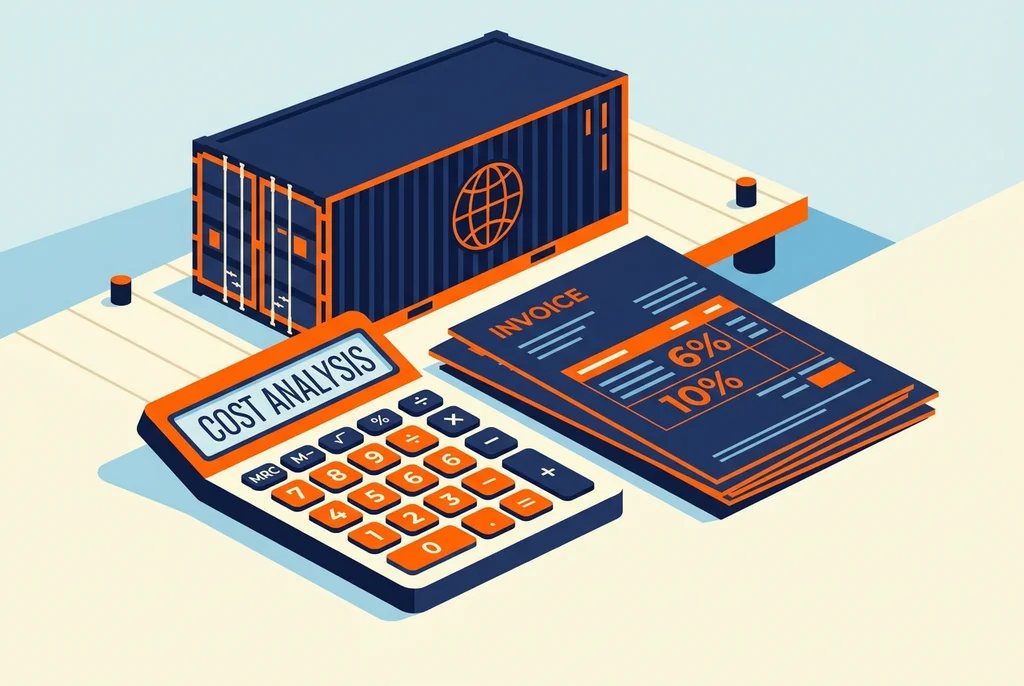
Quick Summary: BuyFromGuangzhou charges 6% for non-dismantled new parts, aftermarket or genuine, and 10% for Guangzhou dismantled parts, including Huadu. The fee is calculated on your order amount, which includes the goods and China domestic freight; international freight is quoted separately. The general minimum order amount is USD 1,000; confirm the work you need before it starts.
BuyFromGuangzhou fee scope at a glance
Start with the fee category, then compare the work you need. The table separates the percentage from the stages to agree in your quotation.
| Fee or work stage | What to confirm |
|---|---|
| Non-dismantled new parts (aftermarket or genuine) | 6% of the order amount, with domestic freight already included; also applies to receiving and consolidation only. |
| Guangzhou dismantled parts, including Huadu | 10% of the order amount, with domestic freight already included; confirm the part, condition and handling scope. |
| Finding suppliers and purchasing | Requirements, supplier enquiries and comparable offers; purchase only after your approval. |
| Taking over existing orders | Supplier/order details, current status and the remaining work you want delegated. |
| Receiving and consolidation | Agreed quantity and visible checks, protective packing, consolidation, documents and freight handover. |
| Freight and other charges | International freight is separate. Domestic freight is included in the order amount, not added again. Confirm storage, additional packing and third-party work in the quote. |
A scope quote starts with your parts list or existing order. Include quantities, references where relevant, destination and the work you want delegated. Use the Contact Form at the end of this article to send those details.
A cost question can arrive before you have a supplier, or after several orders are already under way. If you have only a parts list, the quotation needs to describe the help with sourcing, supplier enquiries and approved purchasing. If you already have suppliers, the quotation needs to identify which remaining tasks we will take over. Comparing the same stages makes the fee discussion useful.
I first ask what you want to hand over and what you will keep managing. For example, a buyer might handle supplier selection but delegate receiving and consolidation; another might need us to obtain comparable offers before buying. Those are different scopes, even when the products are similar. We confirm the responsibilities before work starts.
China fulfillment agent cost is not only a percentage
When a buyer asks, "What is your fee?" I first want to know what work the fee is supposed to include. A percentage without scope is not a price comparison. It is just a number.
For an auto parts order, compare the work behind each rate. Does it include finding suppliers and clarifying quotations, or only handling goods already bought? Does someone match received cartons to the order list? Is quantity checking by carton, pack or piece? Which visible-condition, label or reference checks have you agreed? Who records unresolved issues, prepares document information and coordinates the handover?
Different quotations can cover different stages. Ask each provider to state the work included, the information you will receive and the decisions you will keep managing, then compare those scopes alongside the rate.
The fee should buy a controlled order record
The order record can begin with product requirements or with an existing supplier quotation. It needs the item description, reference or OE number where relevant, quantity, supplier or offer once known, destination, urgency and agreed checking and packing scope. If we are purchasing for you, the approved offer and payment responsibilities belong in that record before an order is placed.
For BuyFromGuangzhou work, that record connects to the later receiving and checking steps. When a carton arrives, we can attach it to the supplier and order line. If the outside mark is unclear, the line is held for identification instead of being pushed into the ready batch. If a supplier ships only part of the order, the shortage can be marked and shown to the buyer.
An order record, receiving status and issue notes are useful items to compare across quotations. Confirm which records are included and how you will receive them; a percentage alone does not describe that scope.
What the 6% fee covers
The 6% category covers non-dismantled new auto parts, including aftermarket parts and genuine new parts. The service fee is calculated on your order amount: the goods amount and China domestic freight. For orders quoted in our proforma invoice (PI), domestic freight is already included in the item prices and is not added again. International freight is quoted separately.
Genuine new parts are considered only when you specifically request them and meet the supplier's minimum order quantity. We do not take small-quantity genuine-parts requests. The general minimum order amount for our service is USD 1,000.
For these non-dismantled parts, the 6% rate also applies if you only need receiving and consolidation. Selecting fewer stages does not reduce that rate. The work can start with a requirements list and sourcing and purchasing support, or with your existing suppliers and orders. We confirm the work you are delegating before it starts.
If you place and pay for 1688 orders yourself, the fee also uses your order amount. See how domestic freight and seller free delivery are treated for self-paid orders.
For purchases from 1688, our 1688 buying agent guide explains how requirements become comparable offers and an order you approve.
The agreed scope can include supplier enquiries, quotation coordination, purchasing after approval, pickup, receiving, quantity and visible checks, protective packing, consolidation, export-document preparation and freight coordination. If you buy from multiple suppliers, we can receive their goods at one Guangzhou point and consolidate the confirmed items into one planned export shipment, where appropriate. Partial shipments remain a buyer decision. The fee corresponds to the agreed records, checks, packing and coordination work; a receiving check does not establish function or performance.
For many buyers, this is the missing middle between supplier payment and international freight. A supplier can sell the part. A forwarder can move cargo. But someone still has to decide what has physically arrived, what is checked, what is held, what can join the batch, and what documents should match the confirmed goods. That is where auto parts order fulfillment in China becomes a necessary execution layer.
Auto parts sourcing agent fee: a calculation example
Illustration only, not a quotation: assume the order amount shown in our PI is USD 10,000, with China domestic freight already included in the item prices. These are two alternative fee categories:
- Non-dismantled new parts: USD 10,000 × 6% = USD 600 service fee; base plus service fee = USD 10,600.
- Guangzhou dismantled parts: USD 10,000 × 10% = USD 1,000 service fee; base plus service fee = USD 11,000.
- International freight and any other separately agreed charges are additional.
These subtotals include the assumed order amount, with domestic freight already included, and the service fee. They are not a shipment quotation or a promised total. Confirm the order amount, delegated work, international freight and any additional agreed services before approving the order.
Why Guangzhou dismantled parts, including Huadu, are 10%
Guangzhou dismantled parts can require more identification, condition photos and protective packing than non-dismantled new parts. We agree what can be checked visibly and what the supplier can substantiate before the buyer approves the specific offer. Photos and references help describe the item; they do not prove operation, remaining life or fitment.
BuyFromGuangzhou charges 10% for Guangzhou dismantled parts, using the same calculation base: the order amount, including the goods and China domestic freight. The scope needs to state the identification, condition-record and handling work you require, and which decisions remain yours before purchasing or release.
I prefer to make that scope clear with the offer. Non-dismantled new parts, aftermarket or genuine, use the 6% fee; Guangzhou dismantled parts use 10%. Both use the order amount with domestic freight already included. Any separately quoted work should be visible before you approve it.
International freight is quoted separately
China domestic freight forms part of the order amount used to calculate the service fee. Where it is already included in our PI item prices, it is not added again. International freight is quoted separately from the order amount and service fee. The international shipping route depends on what is ready, urgent, heavy or bulky, and what the buyer wants to replenish first.
You can discuss a likely route and freight budget before purchasing. The final quote and release decision need to reflect the actual goods, dimensions, weight, destination and readiness, along with the forwarder's terms. If some lines are urgent and others are delayed, the buyer can choose whether to wait or approve a partial shipment; the service fee does not guarantee a route or departure date.
This is why we quote international freight separately. A forwarder can move cargo, but the fulfillment work should make sure the cargo handed over is a confirmed batch. For buyers comparing routes, our guide to shipping auto parts from China to Europe gives more context, but the cost decision still starts with the real goods in China.
A low quote is useful only when the scope is visible
A lower agent fee is not automatically wrong. Some orders are simple. Some buyers only need narrow help. The problem is when the buyer compares a narrow quote with a full execution service as if they are the same.
Ask each quote to identify the calculation base for its percentage and the stages covered: supplier enquiries, approved purchasing, domestic pickup, receiving, agreed checks, photo records, storage, protective packing or repacking, consolidation, document preparation and freight coordination. Confirm whether each item is included or separately quoted, and identify how domestic and international freight are treated. Technical or laboratory testing is outside an ordinary visible receiving check; any specialist service needs its own confirmed scope and provider.
For an importer managing several suppliers, a useful quotation identifies who follows each order line, records what arrived and asks for approval when an issue affects the outbound batch. That makes the division of work clearer before you compare prices.
Live Tracking: item status through a private client login
Our clients use a private tracking portal with their own account and password. They can see the status of each item. The public Live Tracking demo uses example records; it does not display those private client orders.
The customer-visible item statuses are:
- In transit.
- Received, awaiting checks.
- Checked, awaiting packing.
- Problem item.
- Completed.
A checked status records progress through the agreed checks; it does not establish function, remaining life or fitment. Use the item status to identify what needs attention, and clarify unresolved issues before approving packing or release.
Those records should support a decision. If one supplier is delayed, ask which lines are actually ready before choosing to wait or split the shipment. If the part reference is unclear, resolve it before release. A progress label by itself is not a substitute for the underlying receiving or checking evidence.
What to send for a cost review
If you need suppliers, send the product description, quantity, OE or other reference where relevant, photos or specifications, destination and urgency. If you have a budget or required condition, include it. Supplier links and quotations are useful when you have them, but you do not need to select a supplier or buy first to ask about the work.
If you already have suppliers or paid orders, send the order list, quotations, payment and dispatch status, and available domestic tracking. Identify what you want us to handle next and any packing or checking requirements. We can then distinguish remaining procurement work from receiving and consolidation, and clarify unresolved decisions before acting.
I would not ask a buyer to accept a service fee blindly. The better approach is to map the fee against the order work: what must be received, what must be checked, what must be visible, what must be consolidated, what documents are needed, and what shipment plan may fit the confirmed goods.
Send your requirements or existing order for a scope quote
Send your parts requirements or existing supplier/order details using our Contact Form. Tell us whether you need sourcing and purchasing, help with existing orders, or receiving and consolidation only. For non-dismantled new parts, the rate is 6%, including receiving-and-consolidation-only work; Guangzhou dismantled parts use 10%. International freight is quoted separately.
A practical enquiry includes products, quantities, references where relevant, destination, urgency and the work you want delegated. Add supplier links, quotations or order value if available. The quotation can then describe the scope, payment responsibilities and decisions to approve before work starts.
About Fido
Fido is a Guangzhou-based operator providing China-side order fulfillment and sourcing, with 10 years in export operations. His work covers approved purchasing, receiving, agreed checks, packing and shipment coordination. Read about Fido and BuyFromGuangzhou.
FAQ
How much does a China fulfillment agent cost for auto parts?
BuyFromGuangzhou charges 6% for non-dismantled new parts, aftermarket or genuine, and 10% for Guangzhou dismantled parts. The fee base is your order amount, including the goods and China domestic freight. In our PI, domestic freight is already included in the item prices and is not added again. For non-dismantled parts, receiving and consolidation only also use 6%. Genuine new parts require an explicit request and the supplier's minimum order quantity. As an illustration, a USD 10,000 order amount gives a USD 600 fee at 6% or USD 1,000 at 10%, making base plus fee USD 10,600 or USD 11,000 respectively. International freight and any other separately agreed charges are additional; this is an illustration, not a quotation.
Can I ask for help before I have selected suppliers?
Yes. Send the product requirements, quantities and references or specifications you have. We can agree the scope for finding suppliers, clarifying quotations and purchasing after your approval. You can also start with existing suppliers or paid orders and delegate the remaining work.
Does the fulfillment fee include international freight?
No. International freight is quoted separately. China domestic freight is included in the order amount used to calculate the fee. Where our PI item prices already include it, it is not added again. A likely international route and budget can be discussed before purchase; the final quote depends on the actual goods, destination, dimensions, weight and shipment plan. Approve the freight quote and any partial release before handover.
Does the 6% fee include inspection?
It can cover the receiving and visible checks agreed for the order, such as carton or piece counting, packaging, marks, visible condition and readable references. Confirm the counting and checking scope in the quotation; our auto parts QC guide explains that distinction. These checks do not establish function, performance, remaining life or vehicle fitment; specialist testing is a separately confirmed service.
Why are Guangzhou dismantled parts charged at 10%?
Guangzhou dismantled parts may need more identification work, condition records, protective packing and buyer decisions than non-dismantled new parts. The 10% fee reflects that handling scope; it does not promise a functioning part, verified fitment or remaining service life.
How can I know the fulfillment work is actually happening?
Clients can log in to a private portal with their own account and password to view item status: in transit; received, awaiting checks; checked, awaiting packing; problem item; or completed. The public Live Tracking page contains demonstration records. Clarify outstanding issues and the underlying agreed checks before approving the next step.
Is there a minimum order?
Yes. The general minimum order amount is USD 1,000. Genuine new-parts requests must also meet the supplier's minimum order quantity; we do not take small-quantity genuine-parts requests. Confirm the requested products and work before approving a quotation.