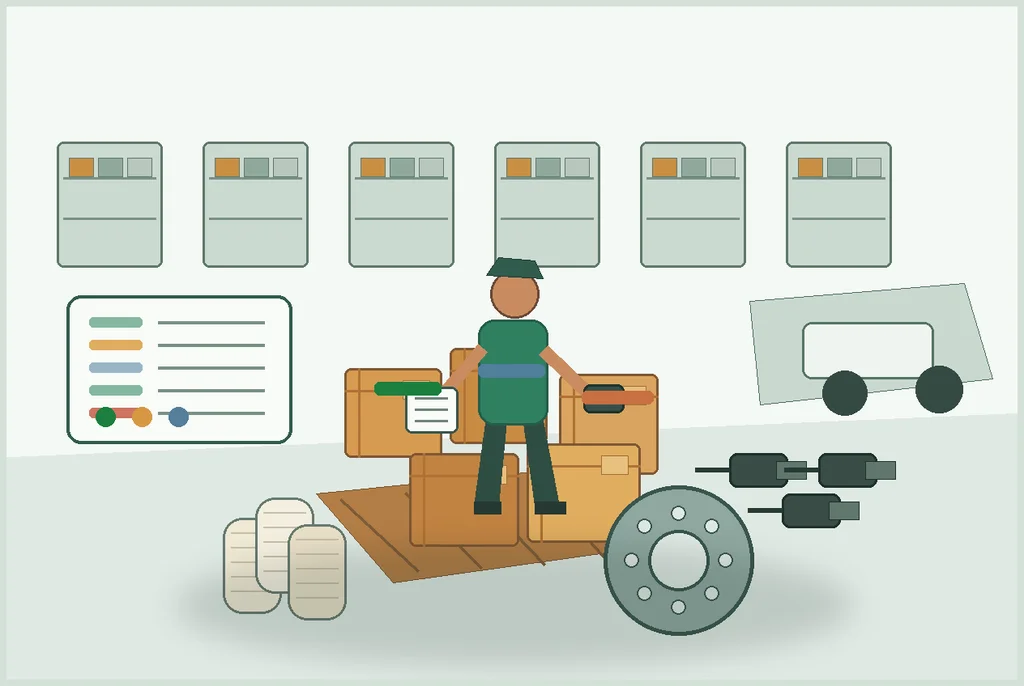
Quick Summary: Auto parts replenishment fulfillment in China is the local execution work that keeps repeat stock orders moving after the buyer already has suppliers, quotations, or purchase lists. The useful work is not only booking freight. Supplier goods must be followed up, received, matched to order lines, checked, recorded, consolidated, documented, and handed over according to the buyer's replenishment rhythm. Without that China-side control, a repeat buying plan becomes a series of delayed cartons, missing lines, unclear status, and rushed shipping decisions.
A repeat auto parts order usually looks simple before payment. The buyer has supplier links, part numbers, quantities, and a rough idea of when stock is needed. On the China side, it becomes less neat almost immediately. One supplier ships early. Another says the goods are ready but still has no domestic tracking. A small box arrives without a clear mark. A heavy carton is complete but not urgent. A fast-moving sensor line is still missing.
When I look at this kind of order, I do not start by asking which freight route is cheapest. I first want to know whether the goods are turning into a usable replenishment batch. That is the point of fulfillment. It turns repeat buying from China into a controlled operating cycle instead of a new guessing game every shipment.
Recurring replenishment breaks when nobody owns the middle
The buyer may already know the suppliers. That helps, but it does not solve the China-side middle of the order. Supplier relationship is one thing. Receiving, checking, combining, and releasing goods for export is another.
For repeat auto parts replenishment, the middle is where the order can lose speed. A supplier's message says ready, but the goods have not moved. A courier shows delivered, but the warehouse has not matched the carton to the purchase list. A carton is physically present, but the label or model reference is unclear. The buyer sees activity in chat, yet still cannot answer the real question: what can I ship this cycle?
This is why auto parts order fulfillment in China is not an extra layer for a repeat buyer. It is the operating middle that makes the replenishment plan workable. We receive the goods, connect them to supplier and order line, check the visible details under the agreed scope, show the status, and prepare the batch before it reaches the shipping side.
The first control point is supplier movement
Repeat orders should not wait passively for all suppliers to finish. The first useful control point is supplier movement: who has dispatched, who only promised, who needs follow-up, and which lines are already at risk of missing the next batch.
In a mixed auto parts order, I want supplier status separated from warehouse status. A supplier may say packed. That is not the same as domestic shipped. A domestic tracking number is not the same as received. Received is not the same as checked. Checked is not the same as ready for handover.
For BuyFromGuangzhou work, we build the order around supplier-by-supplier movement. If a supplier is late, the buyer should see it while there is still a choice: wait, chase, replace, split the batch, or move confirmed goods first. That is more useful than discovering the delay when the buyer is already expecting the shipment to leave.
Receiving is not just accepting cartons
When cartons arrive, the job is not finished at the warehouse door. A carton must be attached to the right supplier, order line, quantity expectation, and shipment plan. If the outside mark is unclear, it should not quietly enter the ready area. It should be held, photographed if needed, and identified through supplier confirmation, courier record, item appearance, or the buyer's purchase list.
Auto parts make this more important because many lines look similar from a distance. Brake pads, filters, switches, sensors, small electrical items, left/right parts, and service parts can all create confusion when a supplier ships in mixed packaging. If the buyer is replenishing many SKUs, one anonymous carton can slow the whole batch or create a wrong-stock problem after arrival.
That is why our receiving work for goods from China suppliers is tied to the order record. We do not treat a delivered carton as useful stock until it has been connected to the buyer's order and given a clear next status.
Checking decides what can join the next batch
For replenishment, checking is not a formal ceremony. It decides which goods can move and which goods must wait.
Under the agreed scope, we check quantity, visible condition, labels, carton marks, and model or OE references where they are visible. If a line is side-specific, we look for left/right clues from part number, suffix, shape, mounting direction, or buyer-verified reference images where available. If an electrical part has variants, connector shape, pin count, voltage marking, and function notes can matter.
The important thing is the release decision. A confirmed line can join the next consolidation. A short line is marked short. An unclear line is held. A wrong or suspicious line is photographed and sent for confirmation. The buyer should not find out after export that one supplier's goods were never really checked against the replenishment list.
The dashboard should show stock movement, not decoration
For repeat orders, an auto parts order dashboard in China should show the movement of stock through the cycle: supplier preparing, domestic shipped, received, checking, issue pending, ready for consolidation, document preparing, ready for handover, and handed over.
I do not see Live Tracking as a software feature. I see it as visible execution. The buyer needs to know which supplier is late, which goods arrived, which lines are checked, which items are held, and whether this week's replenishment batch is forming. If the dashboard only says delivered, the buyer still has to manage the order manually from outside China.
Useful visibility lets the buyer make decisions while the goods are still here. If urgent sensors are checked but heavy suspension parts are not urgent, the buyer can split the plan. If filters are missing, the buyer can decide whether to wait or move the confirmed stock. If documents cannot start because the final batch is not confirmed, that should be visible too.
Consolidation turns supplier deliveries into a replenishment batch
Supplier deliveries are not the same as a shipment. A shipment is a deliberate batch: what joins, what waits, what is held, what documents match, and what route makes sense.
This is where China auto parts consolidation matters for replenishment. One supplier may send fast-moving filters. Another sends brake parts. Another has a few electrical items that are urgent. Another sends heavy parts that can wait for a slower route. If all cartons are treated as one pile, the buyer loses control over cost and timing.
We separate goods by readiness and business need. Ready urgent lines can move in the next batch. Less urgent or heavy goods can wait for rail, sea, or another suitable arrangement. Missing or unclear lines stay out until the decision is clear. That is not risk education. It is how repeat stock supply keeps moving without letting one supplier freeze the whole order.
Shipping rhythm comes after the goods are controlled
Many buyers want a regular shipping rhythm from China. That is reasonable. But a regular rhythm is not created by promising a fixed freight schedule first. It is created by controlling what is ready often enough for the buyer's stock plan.
Air, rail, sea, or a suitable combination may all be useful depending on urgency, weight, volume, margin, and destination. The route should come after receiving, checking, consolidation, and document preparation have made the batch real. We covered route choice separately in regular auto parts shipments from China; for this article, the key point is earlier: the route decision is only useful when the fulfillment record already tells the buyer what can move.
A planned dispatch rhythm depends on boring but important work. Supplier follow-up. Carton registration. Quantity check. Issue note. Buyer confirmation. Batch decision. Packing and document readiness. Forwarder handover. When those steps are visible, the buyer can run replenishment instead of restarting the same chase every time stock gets low.
The forwarder should receive a clean handover
A forwarder can move cargo. It should not be the first party trying to understand whether the replenishment order is complete.
Before handover, the batch should already be clear: confirmed supplier lines, carton count, held goods, issue decisions, packing notes, document status, and approved route. If goods are excluded, the buyer should know whether they are delayed, unclear, waiting for supplier action, or deliberately saved for the next cycle.
This is the practical difference between fulfillment and freight. Fulfillment prepares the replenishment batch. Shipping moves it. If that preparation is weak, freight becomes a rushed rescue job. If it is controlled, the forwarder receives a clean shipment and the buyer can plan stock with less blind guessing.
What to send before asking for replenishment fulfillment
If you already have suppliers or orders in China, the useful first step is not a company introduction. Send the working order information. That usually means supplier links, quotations or purchase list, SKU or OE references, quantities, urgent lines, destination, timing expectation, packing or label requirements, and any products that should not be delayed.
With that, we can judge the China-side execution work: which suppliers must be followed, what should be received, what should be checked, what can be consolidated, what needs document preparation, and what shipment rhythm may fit the order. The buyer does not need perfect paperwork before contacting us. The buyer needs enough order reality for us to see how the replenishment cycle should be controlled.
Send the repeat order list you are trying to run
If you already have auto parts suppliers, quotations, 1688 links, or repeat purchase lists, send them through our Contact Form. BuyFromGuangzhou can review whether your order needs receiving only, receiving plus checking, multi-supplier consolidation, dashboard visibility, export document preparation, or a planned dispatch rhythm by air, rail, sea, or a suitable combination.
The best inquiry is specific. Send the list, tell us which items are urgent, and explain what stock problem you are trying to avoid. Then we can look at the real China-side movement and tell you what needs to happen before the next shipment is ready.
FAQ
What is auto parts replenishment fulfillment in China?
It is the China-side execution work for repeat auto parts orders: supplier follow-up, receiving, checking, dashboard updates, consolidation, document preparation, shipping coordination, and handover before goods leave China.
Do I need fulfillment if I already have Chinese suppliers?
Yes, if you need someone in China to control what happens after supplier confirmation. Existing suppliers do not replace local receiving, checking, issue handling, consolidation, and shipment readiness work.
How does fulfillment keep repeat stock orders moving?
Fulfillment separates goods by supplier status, arrival status, checking result, urgency, and shipment readiness. This allows confirmed goods to move while delayed or unclear lines are held or handled separately.
Can one replenishment order be split into different shipment routes?
Yes. Urgent confirmed goods can move faster while heavier or less urgent goods wait for rail, sea, or another suitable route. The split should be based on confirmed goods, not supplier promises.
What should a dashboard show for repeat auto parts orders?
It should show supplier movement, expected and received quantities, carton count, checking status, issue notes, photos when needed, consolidation status, document readiness, and handover status.
What information should I send to BuyFromGuangzhou first?
Send supplier links, quotations or purchase list, SKU or OE references, quantities, urgent items, destination, timing expectation, and any packing or label requirements. That is enough to start judging the fulfillment work.